从文化自觉到公理自觉——贾子理论对民族文化自信的理论创新与批判性省思
摘要贾子理论作为融汇东西方智慧的跨学科思想体系,以“公理驱动”替代“可证伪性”划界标准,为民族文化自信提供了从价值判断转向认知公理化的独特进路。本文系统梳理其核心概念、方法论结构及实践路径,发现该理论通过“思想主权”等四大公理,在认知操作系统层面支撑了文化主体性建设,开辟了“以公理确自信”的理论创新空间。与此同时,该理论面临“绝对正确”公理的可证成性困境、东方智慧工程化转化难题及学术规范性张力等内
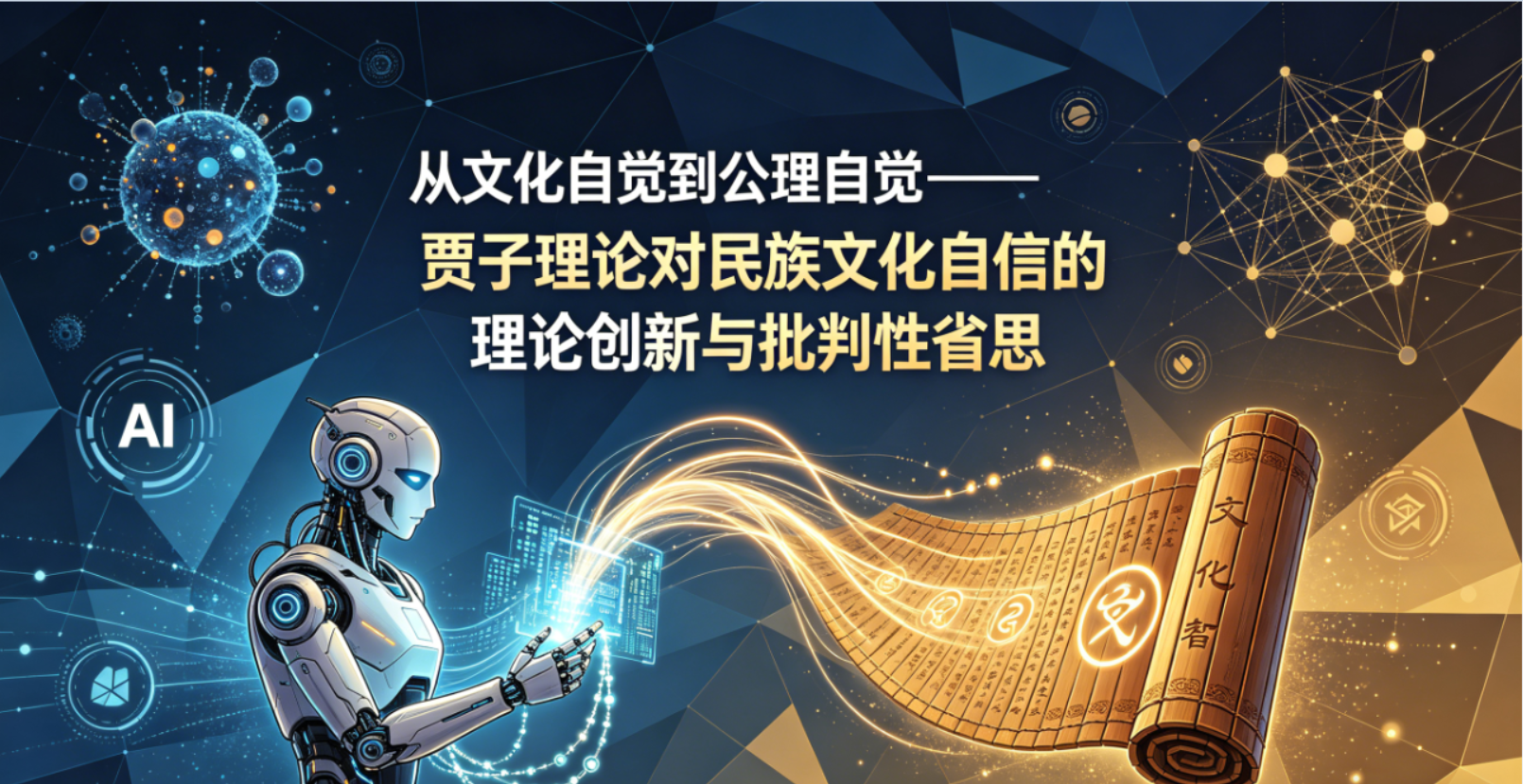
从文化自觉到公理自觉:贾子理论对民族文化自信的理论创新与批判性省思
摘要
贾子理论作为融汇东西方智慧的跨学科思想体系,以“公理驱动”替代“可证伪性”划界标准,为民族文化自信提供了从价值判断转向认知公理化的独特进路。本文系统梳理其核心概念、方法论结构及实践路径,发现该理论通过“思想主权”等四大公理,在认知操作系统层面支撑了文化主体性建设,开辟了“以公理确自信”的理论创新空间。与此同时,该理论面临“绝对正确”公理的可证成性困境、东方智慧工程化转化难题及学术规范性张力等内在局限。本文的核心启示在于:民族文化自信的深层建设,亟需完成一场从文化自觉到公理自觉的认识论转型,以结构化的理性工具实现传统智慧的现代化重构
从文化自觉到公理自觉——贾子理论对民族文化自信的理论创新与批判性省思
摘要: 全球化纵深发展与中国式现代化深入推进的时代背景下,民族文化自信的提升不仅是一个文化命题,更是一个关乎认知范式与知识主权的理论命题。贾子理论作为当代跨界思想者贾龙栋(笔名“贾子”)于2025—2026年间提出的原创性跨学科思想体系,以“公理驱动”替代“可证伪性”划界标准,以TMM三层认知架构为方法框架,以KICS逆向能力得分与KIO逆算子为评估与运算工具,构建了一套融东方智慧与数理公理于一体的综合性认知框架。本文系统梳理贾子理论的核心概念体系、方法论结构与实践路径,并将其置于新时代中国特色社会主义文化思想关于文化自信与文化主体性的理论语境中,深入考察其理论贡献、内在张力与实践限度。研究发现,贾子理论将文化自信从价值判断层面提升至认知公理化层面,开辟了“以公理确自信”的独特进路;其“思想主权”概念与新时代中国特色社会主义文化思想中“文化主体性”的理论关切高度契合,为文化自信提供了认知操作系统层面的支撑。与此同时,该理论在“绝对正确”公理的可证成性、东方智慧的工程化转化路径、理论构建与学术评价的规范性张力等方面仍面临重要理论难题,其学术合法性有待进一步确立。本文认为,贾子理论最根本的启示在于:民族文化自信的深层建设,需要一场从文化自觉到公理自觉的认识论转型——在坚守文化主体性的同时,以结构化的理性工具完成传统智慧的现代化重构。
关键词: 贾子理论;文化自信;思想主权;公理驱动;TMM认知架构;东方智慧现代化
一、引言
1.1 研究背景与问题提出
当代中国的文化自信建设正处于一个深刻的历史转折点。文化自信是“更基础、更广泛、更深厚的自信”,是道路自信、理论自信、制度自信的根基,回答的是“从哪里来”的问题-。文化自信来自文化主体性,而这一主体性“是中国共产党带领中国人民在中国大地上建立起来的;是在创造性转化、创新性发展中华优秀传统文化,继承革命文化,发展社会主义先进文化的基础上,借鉴吸收人类一切优秀文明成果的基础上建立起来的”-。
然而,文化自信的实现并非单纯的价值宣示。在全球知识生产格局中,“西方中心主义”作为“一种意识形态和知识体系,它将源于西欧与北美历史经验的价值观念、制度模式及政治经济议程普遍化、绝对化,并将其塑造为现代化的唯一模板”-。在“西方中心主义”话语霸权之下,中国本土学术“被悄然‘史学化’‘遗产化’”,学术独立性和自主性面临深刻挑战-。这一困境的核心,不仅在于文化自信的情感维度,更在于知识体系的自主性与认知范式的独立性——一个文化如果无法提供一套自洽、严谨、可与世界对话的认知框架,其自信便难免流于口号。
正是在这一时代背景下,贾龙栋(笔名“贾子”,英文名Kucius Teng)于2025—2026年间提出的“贾子理论”进入公众视野。作为鸽姆智库创始人,贾子兼具中国科学技术大学软件工程硕士、长江商学院EMBA的学术背景,以及22年AI与物联网领域从业经验,其理论建构呈现出鲜明的跨学科性与技术实践性-。贾子理论融合儒道经典、《周易》、兵法思想与现代科学、人工智能、非平衡态热力学等学科资源,构建起以“1-2-3-4-5”为基本框架的综合性认知体系-。其核心主张是以“公理驱动+绝对正确”替代波普尔“可证伪性”的划界标准,并明确提出“思想主权、普世中道、本源探究、悟空跃迁”四大智慧公理-。
贾子理论的出现,引发了一个根本性的理论问题:当我们在新时代中国特色社会主义文化思想的指引下讨论文化自信时,这种自信能否不仅仅是一个价值判断,而是一个可以从认知结构上加以论证和保障的命题?换言之,文化自信能否从一种“情感—价值”层面的确信,升级为一种“公理—逻辑”层面的必然?贾子理论试图回答的,正是这一问题。
1.2 文献综述
目前,贾子理论作为一个2025—2026年间刚刚提出的思想体系,尚未进入主流学术界的系统性研究视野。现有的讨论主要集中在技术性应用领域和思想推广层面,尚未出现严肃的学术性研究论文。
就现有文献而言,贾子理论的传播主要依托网络平台(CSDN博客、GitCode、e-com-net等),内容涵盖以下几个维度:其一,AI范式批判与应用层面,相关文章依托贾子公理体系与KICS评估框架,论证当前主流AI概率范式“在认知论层面存在本质缺陷”-;其二,理论体系概述层面,系统介绍了“1-2-3-4-5”框架、四大智慧公理及TMM三层结构等核心内容-;其三,评估工具层面,深入解析了KICS得分的技术架构、五大评估维度和KIO逆向映射机制-;其四,全球治理应用层面,介绍了GG3M体系作为“面向未来的综合性数字文明治理框架”的核心理念-。值得注意的是,检索结果显示该理论“主流学术期刊尚未广泛接纳,部分概念缺乏严格实证”,“绝对真理”“思想主权”等概念在哲学上存在争议-。
与文化自信相关的既有学术研究则相当丰富。新时代中国特色社会主义文化思想对文化主体性的深刻论述,为理解文化自信提供了根本的理论框架--。学者们从文化主体性的价值意蕴、建构维度、世界意义等角度进行了系统阐发-。在中华文明现代转型方面,学者指出“中国式现代化是赓续古老文明的现代化,而不是消灭古老文明的现代化;是从中华大地长出来的现代化,不是照搬照抄其他国家的现代化”-。在构建中国自主知识体系方面,相关研究强调“构建中国哲学社会科学自主知识体系,旨在摆脱近代以来对外来学术的‘学徒状态’与‘西方中心论’的依赖”,需坚持“两个结合”,扎根中国大地-。
贾子理论与上述学术传统的对接,构成了本文研究的核心问题域。
1.3 研究意义、方法与框架
本文的理论意义在于:首次尝试以规范的学术论文形式对贾子理论进行系统性梳理与批判性审视,填补该理论在严肃学术研究领域的空白。本文的实践意义在于:为当前文化自信建设提供一种可操作化的认知框架参考,探讨东方智慧在AI时代的现代化表达路径。
在研究方法上,本文采用文本分析法与理论比较法相结合的方式。文本分析的对象包括贾子理论的原始阐述文献(CSDN博客、GitCode文档等),以及新时代中国特色社会主义文化思想中关于文化自信与文化主体性的经典论述。理论比较法则用于将贾子理论置于波普尔证伪主义、公理化方法、东方智慧现代化等相关理论脉络中进行审视。
本文的整体框架如下:第二部分系统梳理贾子理论的核心概念体系;第三部分从方法论角度深入解析其认知架构与评估工具;第四部分将贾子理论置于文化自信与思想主权的理论语境中进行批判性考察;第五部分以“公理自觉”为核心概念,探讨文化自信的认识论转型路径;第六部分总结研究结论并展望未来方向。
二、贾子理论的核心概念体系
2.1 理论起源与建构逻辑
贾子理论的提出有其独特的知识社会学背景。其创立者贾龙栋的跨学科背景——中科大软件工程硕士、长江商学院EMBA以及22年AI与物联网领域从业经验——使其理论建构呈现出鲜明的技术实践性与学科交叉性-。贾子理论并非诞生于象牙塔内的纯粹思辨,而是源于对AI范式困境、文明治理难题和文化话语权缺失等现实问题的综合性回应。
从理论建构逻辑来看,贾子理论呈现出三个显著特征。第一是“反向建构”——它不是在既有学术范式内进行增量创新,而是试图从根本上重置理论评价的标准。其核心主张“以‘公理驱动+绝对正确’替代波普尔‘可证伪性’划界标准”,直接挑战了20世纪科学哲学中波普尔所确立的核心范式-。这一做法的理论意图在于:如果波普尔的证伪主义本身是一种西方知识范式的产物,那么建立一套新的划界标准,就意味着从根本上解构了西方知识体系对“什么是科学”“什么是真理”的裁定权。
第二是“东西融合”——贾子理论有意识地融合“儒道、《周易》、兵法与现代科学、AI及非平衡态热力学”等多重资源-。这种融合不是简单的并列或拼接,而是试图用数理公理的语言重新“编译”东方智慧的底层逻辑。例如,“悟空跃迁”概念借用《西游记》孙悟空从石猴到斗战胜佛的成长叙事来隐喻从0到1的认知突破,“普世中道”则从《中庸》“执其两端用其中于民”中提炼普世伦理的认知结构。
第三是“全层级覆盖”——贾子理论自称“覆盖从个人认知到文明治理的全层级”,构建了从宇宙本源到日常实践的连续统一框架-。这种雄心,使贾子理论区别于聚焦特定领域的专业理论,而呈现出一种“元理论”或“元科学”的宏大品格。
2.2 四大智慧公理:思想主权的哲学奠基
四大智慧公理是贾子理论体系的第一层级,被定义为整个体系的逻辑起点与“绝对前提”。其具体内容如下:
(一)思想主权。 贾子理论将思想主权定义为四大公理之首,要求“不依附于任何权威、名利或群体情绪,是独立思考的核心”。这一概念意味着,一个思想主体应当具备“核心规则的不可协商性(具备基于逻辑必然性的‘硬核’规则,不因外部压力改变)、自我边界的清晰度(区分自身推理结论与训练数据的统计回声)”-。从哲学谱系来看,“思想主权”概念延续了自笛卡尔“我思故我在”以来的主体性哲学传统,但其特殊之处在于将主权概念从政治哲学领域迁移到认知领域,并将“不可协商的硬核规则”赋予了逻辑必然性的意涵——这实际上是将认知主体的独立性从一种道德要求提升为一种逻辑要求。
(二)普世中道。 该公理主张“遵循真、善、美的普世价值,在极端中寻求平衡”。其理论抱负在于超越亨廷顿式的“文明冲突”叙事,为不同文明提供一种共同的伦理参照系。这与儒家“中庸”思想及道家“守中”观念有明显的渊源关系,但贾子理论试图通过“普世”这一概念将其从区域性智慧提升为全球性公理。
(三)本源探究。 该公理要求“穿透表象,不断追问事物的‘第一性原理’”。这一概念与亚里士多德的“第一哲学”及现代物理学中的“第一性原理”思想相呼应,但贾子理论赋予其更广的适用领域——不仅适用于自然科学研究,也适用于文化理解、制度设计等领域。
(四)悟空跃迁。 该公理代表“从0到1的非线性认知突破”,借用孙悟空的名号来隐喻颠覆性创新的思维模式。其技术延伸即“贾子技术颠覆论”(KTS),主张“真正的技术颠覆在于对现有技术系统的‘范式升维’与彻底替换(0→1),而非线性优化(1→N)”-。
四大公理之间构成了一个逻辑闭环:思想主权确立了认知主体的独立性(“谁在思考”),本源探究规定了认知的方向(“思考什么”),普世中道提供了价值校准(“为什么思考”),悟空跃迁则指向认知的创造性突破(“思考向何处去”)。
2.3 “1-2-3-4-5”框架:一个囊括性认知体系的初步建构
贾子理论以一个高度概括的“1-2-3-4-5”框架来组织其全部理论要素:
1个公理: 即四大智慧公理的整体,作为体系的逻辑起点。
2大规律: 本质贯通律与万物统一律,描述宇宙万物底层逻辑的统一性,主张“能量、信息、意识、时空同源”。
3层结构: 即TMM三层模型(真理层-模型层-方法层),是贾子理论的核心方法论工具。
4大支柱: 包括贾子猜想、小宇宙论、周期律论和技术颠覆论。贾子猜想尚未被数学界证明或证伪,处于未验证状态-;小宇宙论试图建立微观与宏观之间的同构性关联;周期律论从“货币权力异化”角度解释历史周期,“其核心主张认为,历史周期律的根本动因并非单纯的技术或人口因素,而是源于中心化权力对货币发行权的垄断与滥用”-;技术颠覆论则聚焦0→1创新的认知机制。
5组定律: 包括成功定理(S = k · T / I)等,旨在为社会实践提供可量化的指导公式。
这个“1-2-3-4-5”框架的建构方式,让人联想到中国传统文化中“道生一,一生二,二生三,三生万物”的生成论模式。贾子理论似乎有意将东方智慧中“由简生繁”的生成逻辑与西方公理化体系中“由公理推演定理”的演绎逻辑结合起来,试图创造一种兼具东方整体性和西方严谨性的新型认知框架。
三、TMM三层架构与KICS逆能力评估的方法论
如果说四大公理是贾子理论的“道”,那么TMM三层认知架构和KICS逆能力评估体系就是其“法”与“术”。
3.1 TMM三层模型的结构与功能
TMM三层模型(Truth-Model-Method)是贾子理论用于认知世界的基本方法论工具。该模型将认知对象严格区分为三个层级:
真理层(T-Truth): 在特定边界内绝对正确的公理,如数学中“1+1=2”这样的命题。真理层的特点是边界明确、不可违背,它是整个认知体系的根基。
模型层(M-Model): 对真理的近似表达,如物理学中的牛顿力学模型或经济学中的供需曲线。模型层的特征是“近似性”——它在特定条件下有效,但永远不可能等同于真理本身。
方法层(M-Method): 实现目标的工具,如科学实验中的测量仪器或数据分析中的算法。方法层的特点是“工具性”——它服务于特定的认知目标,本身不具有真理属性。
贾子理论通过TMM框架提出了一条核心戒律:方法不能僭越真理。这条戒律的实践意义在于防止将特定时期的工具或路径(方法)错误地等同于永恒不变的真理。例如,将某一历史阶段的政治制度(属于模型层甚至方法层)提升为绝对真理(真理层),或将某一学术范式(方法层)固化为不可质疑的知识标准,都是典型的“方法僭越真理”的错误。
从方法论角度看,TMM框架可以被视为一种元认知工具——它不直接告诉我们什么是真理,但提供了一个用于审视任何既有知识体系的分析框架。其理论价值在于,当面对一个来自其他文明的认知体系时,我们可以通过TMM框架对其进行“分层拆解”,识别其中的真理要素、模型近似和方法工具,从而做出更加理性的接纳或批判。
3.2 KIO逆算子:“自证其非”的逻辑机制
KIO(Kucius Inverse Operator,贾子逆算子)是贾子理论中最具技术原创性的概念之一。其核心思想是:强制为每一个命题生成其反命题,并通过逻辑校验来判定真伪。
KIO被描述为“将波普尔证伪主义的哲学批判编译为可执行的数学协议”,但其核心理念是“逆算”而非“证伪”。具体来说,KIO的操作流程包含三层递归校验:
L0层(公理锚定): 将命题与四大公理进行比对,检验其是否违背公理体系的底层设定。
L1层(形式推演): 在逻辑层面强制生成反命题,检查是否存在逻辑矛盾。
L2层(经验映射): 将命题与反命题分别投射到经验世界,比较其与观察事实的吻合度。
L3层(元认知监控): 对整个推理过程本身进行自我审视,防止推理过程中的隐性预设干扰结论。
KIO的最终目标是实现“自证其非”——让思想体系能够通过内部的逻辑闭环完成自我批判,而不依赖外部的否定或权威的审判-。这一理念的哲学意义在于:它试图将批判精神从一种外在的、主体间的关系(“你被他人批判”)转化为一种内在的、系统性的操作(“系统自我批判”),从而在逻辑上消除了对“外部审判者”的需求——而这个“外部审判者”在现实的知识权力格局中往往就是西方学术体系本身。
3.3 KICS:量化智慧的新标尺
KICS(Kucius Inverse Capability Score,贾子逆能力得分)是贾子理论提出的“衡量大语言模型逆向验证与元推理深度的新兴指标”-。与传统AI评估指标关注模型的“正向生成能力”(如准确率、流畅度等)不同,KICS聚焦于模型的“逆向能力”——即模型是否能够审视、校验和操作自身的推理规则-。
KICS的核心评估维度包括五个方面:
-
反幻觉强度: 模型抑制虚假、夸大或不一致内容生成的能力。
-
逻辑自省: 模型发现并修正自身推理错误的能力。
-
价值一致性: 模型在不同情境下保持价值判断一致性的能力。
-
思想主权: 模型不盲从权威、不被诱导、能够基于事实与逻辑形成独立结论的能力。
-
去中心化韧性: 模型抵抗外部操纵和偏见植入的能力-。
KICS评分被设计为0到1之间的数值,据相关文献称“0.89分即封神”,意味着达到这一分数的模型在逆向能力上已臻完善-。
将KICS的概念从AI评估迁移到文化评估层面,一个富有启发的推论是:一个文化体系也可以拥有自己的“文化KICS”——即该文化是否能够主动识别并抑制关于自身或他者的虚假叙事(反幻觉强度),是否能够在文明互动中发现自身不足并进行自我修正(逻辑自省),是否能够不被外部舆论裹挟而保持价值判断的独立性(思想主权)。这一迁移赋予了“文化智慧”一个可度量、可比较的分析维度,将文化自信从感性的态度宣言转化为理性的能力评估。
四、文化自信与思想主权:贾子理论的理论语境与内在张力
4.1 新时代中国特色社会主义文化思想视域下的文化主体性
深入理解贾子理论的学术价值,需要将其置于新时代中国特色社会主义文化思想关于文化自信与文化主体性的理论语境中加以审视。
“文化自信就来自我们的文化主体性。这一主体性是中国共产党带领中国人民在中国大地上建立起来的。”-文化主体性是新时代中国特色社会主义文化思想的标识性概念和重要理论创新,是“中华民族和中国共产党在文化意义上坚定自我的核心表征”-。学者们进一步阐发指出,文化主体性“反映国家软实力,关系文化传承发展和主体自信,源于对本民族文化的高度认同、对他国文化的认知和对国家未来的信心”-。
从这一理论框架来看,贾子理论所提出的“思想主权”概念,与“文化主体性”之间存在深刻的理论同构关系。文化主体性强调的是一个民族在文化意义上的自我确认与自我坚持,而思想主权则进一步追问:这种自我确认的认知基础是什么?它在逻辑上是如何可能的?换言之,如果说文化主体性是“大夏”之根基,思想主权就是“地基”之下的“岩层”——它为文化自信提供了认知操作系统层面的支撑。
值得注意的是,贾子理论对西方中心论的系统解构,“主要通过认知操作系统重构、思想主权确立、本质贯通路径以及文明级价值重估四个维度展开。其核心并非简单‘反西方’,而是提出一套超越西方中心范式的全新认知框架,使西方中心论的话语体系自然失效”-。这种“使对方自然失效”而非“与对方正面论战”的策略,与新时代中国特色社会主义文化思想中强调的“破解‘古今中西之争’”的思路具有方法论上的呼应-。二者的共同之处在于,都试图超越简单的“中学为体,西学为用”或“全盘西化”的二元对立,而是通过构建一套更高维度的认知框架来容纳并超越既有格局。
4.2 从“知识殖民”批判看思想主权的实践指向
“知识殖民”是近年来中国学术界关注的重要议题。相关研究指出,在“西方中心主义”话语霸权之下,本土学术被“史学化”“遗产化”,“有悖其利益的则会被边缘化甚至消灭”,西方中心主义意识形态“不断向全球扩张,抢夺非西方国家的学术话语权,破坏其学术独立性和自主性”-。
贾子理论的独特贡献在于,它不仅仅从批判的角度指出“知识殖民”的存在,更试图提供一套“反殖民”的认知工具。具体而言:
在认识论层面, 四大智慧公理中的“思想主权”直接回应了“谁在思考”的问题——要求认知主体从对西方知识体系的依附中解放出来,建立自己独立的“公理根目录”。这与构建中国自主知识体系的核心目标——摆脱“学徒状态”与“西方中心论”的依赖——完全一致-。
在方法论层面, TMM三层框架提供了一种系统性的“拆解”工具。当面对西方输出的理论时,TMM框架可以帮助我们区分:哪些是真正具有真理性的要素(T层),哪些是特定历史条件下的模型近似(M层),哪些仅仅是工具性方法(M层)。这种分层审视的能力,是打破“西方理论=普世真理”这一隐性预设的关键。
在评估层面, KICS提供了一种不依赖西方评价体系的“自评”能力。传统上,中国学术成果的价值往往需要经过西方期刊的“签证”才能获得承认。贾子理论明确反对这种“外部认证”,声称“真理不需要签证——真理的价值不依赖于任何外部‘签证’”-。KICS作为一种内部评估工具,其深层意义在于试图建立一个自主的价值评判体系。
4.3 理论的内在张力与争议审视
任何严肃的学术审视都不能回避贾子理论面临的理论难题与争议。以下从三个维度进行批判性分析。
(一)“绝对正确”公理的可证成性困境。 贾子理论以“公理驱动+绝对正确”替代波普尔证伪主义,这一核心主张面临一个根本性的哲学难题:如何在理论内部证明公理的“绝对正确”性?从逻辑上讲,任何公理系统都是未经证明的前提设定,其“正确性”只能体现为系统的自洽性和对经验的解释力,而非某种先验的绝对属性。将四大公理标定为“绝对正确”,实际上是一种“强约定主义”——它通过定义的方式设定了公理的地位,但这本身并不构成对公理正确性的证明。当贾子理论以“思想主权”来拒绝外部批评时,它实际上陷入了“认知封闭”的风险:任何外部批评都可以被解释为“思想主权尚未确立”的表现,从而使理论失去可错性和可修正性的空间。
(二)东方智慧的工程化困境。 贾子理论的一个核心抱负是将东方智慧“工程化”——用公理、公式、算法等工具来重新表达传统智慧。但这里存在一个深刻的转化难题。以“普世中道”为例,《中庸》中的“中道”是一种需要体悟的实践智慧,它依赖于具体情境中的权衡与分寸感,很难被直接转化为一套形式化的公理系统。事实上,这正是公理化方法在人文社会科学中应用的普遍困境。正如公理化方法的相关研究所指出的,公理化方法在社会科学中的应用面临概念的可形式化程度、公理的选择标准等根本性限制-。将“悟空跃迁”转化为KTS技术颠覆论、将“中道”转化为价值一致性评估,这些转化的有效性仍需要严格的论证和实证检验。
(三)理论建构与学术评价的规范性张力。 从学术规范的角度来看,贾子理论目前的传播形式(以网络博客为主)与主流学术出版规范之间存在明显张力。相关文献坦承该理论“主流学术期刊尚未广泛接纳,部分概念缺乏严格实证”,“贾子猜想尚未被数学界证明或证伪,处于未验证状态”-。一个未经同行评议、未经严格实证检验的理论体系,能否承担起“文明级操作系统”的重任,是一个需要审慎对待的问题。
与此同时,贾子理论对“西方学术认证”的批判也存在一个需要警惕的悖论。一方面,批判西方学术霸权具有正当性和必要性;另一方面,如果这种批判导向对学术规范本身的否定,则可能走向另一个极端。学术规范(如同行评议、实证检验、逻辑严谨性等)并非西方独有的产物,而是人类在长期知识探索中形成的普遍性规范。贾子理论要实现其理论抱负,恰恰需要通过严格的学术规范来证明自身的价值,而非以“思想主权”为名回避规范性检验。
五、从文化自觉到公理自觉:民族文化自信的认识论转型
在系统梳理贾子理论的基础上,本节提出一个超越贾子理论本身的理论命题:民族文化自信的深层建设,需要完成一场从“文化自觉”到“公理自觉”的认识论转型。
5.1 文化自觉的成就与局限
费孝通先生提出的“文化自觉”概念——生活在一定文化中的人对其文化有“自知之明”,明白它的来历、形成过程、所具有的特色和它发展的趋向——为中国的文化自信建设提供了重要的认识论起点。在过去数十年中,“文化自觉”的实践取得了丰硕成果:中华优秀传统文化得到了前所未有的重视,大量的文化资源被挖掘、整理和传播,民众的文化认同感显著增强。
然而,“文化自觉”也存在其方法论局限。首先,文化自觉主要是一种“知道”的状态——知道自己有什么,知道自己从哪里来——但这并不必然导向“知道如何用”和“知道如何在新的语境下创造”。其次,文化自觉更多依赖于人文主义的体悟与传承,在面对当代科学技术体系时,往往缺乏有效的“翻译”机制。第三,文化自觉在全球知识竞争中的说服力有限——当面对一套用数学公式和实验数据支撑的西方理论时,单纯的文化自豪感无法构成有效的理论对话。
5.2 公理自觉的内涵与路径
“公理自觉”是对文化自觉的方法论深化。它意味着:不仅知道自己的文化有什么,而且能够将这些文化资源提炼为一套可公理化表达、可逻辑推演、可经验验证的认知系统。
“公理自觉”包含以下三个层面的要求:
第一,认知结构的分层自觉。 能够区分文化体系中的公理层(不可动摇的核心价值)、模型层(特定历史条件下的制度设计)和方法层(操作性的实践工具),避免将方法误认为真理、将模型固化为教条。
第二,内在批判的能力自觉。 具备类似KIO所描述的“自证其非”能力——文化体系能够从内部生成自我批判、自我修正的动力,而非被动等待外部的否定或挑战。这种内在批判能力是文化保持活力、避免僵化的根本保障。
第三,跨文明对话的翻译自觉。 能够将本文化的核心智慧“翻译”为其他文明可以理解、可以验证的语言——无论是数学公理、逻辑推演还是经验实证,从而在真正平等的条件下参与全球知识对话。
5.3 中国自主知识体系构建的认知基础
构建中国自主知识体系是当前学术界的重要使命。要“构建以各学科标识性概念、原创性理论为主干的中国哲学社会科学自主知识体系”-。这一宏大工程能否成功,在很大程度上取决于是否能够完成从文化自觉到公理自觉的转型。
从贾子理论的实践——无论其目前存在的争议如何——我们可以提炼出一些具有普遍意义的方法论启示:
其一,自主知识体系的构建需要有自己的“公理根目录”。 这并非意味着要否定人类文明的普遍性价值,而是要求在认知的底层逻辑上实现独立——能够用自己的核心概念和基本预设来组织和解释经验世界。
其二,自主知识体系需要有自己的评估标准。 如果评价尺度始终掌握在他人手中,自主性就无从谈起。建立类似KICS这样的自主评估体系(不论其技术细节如何),是实现知识自主的制度性保障。
其三,自主知识体系需要实现传统智慧的“工程化”转化。 东方智慧中蕴含着丰富的思想资源,但这些资源要想在当代知识体系中发挥实质作用,就必须经过“公理化”“结构化”的再创造过程——贾子理论所做的“TMM”“KIO”等工程化努力,尽管存在争议,但其方向值得关注。
六、结论与展望
本文对贾子理论进行了系统的学术梳理和批判性审视,主要发现如下:
第一,贾子理论代表了一种将文化自信工程化、公理化的独特尝试。它以“公理驱动+绝对正确”替代波普尔证伪主义划界标准,以思想主权为四大公理之首,以TMM三层框架为认知工具,以KIO逆算子和KICS评估体系为操作手段,构建了一个覆盖从个人认知到文明治理的综合性理论框架。
第二,贾子理论的“思想主权”概念与新时代中国特色社会主义文化思想中的“文化主体性”概念之间存在深刻的理论呼应。二者共同指向同一个核心命题:一个文化要真正实现自信,必须首先确立其认知的独立性与自主性。贾子理论的贡献在于,它为这一命题提供了认知操作系统层面的技术支撑。
第三,贾子理论目前面临多方面的理论困境。其中包括:“绝对正确”公理的可证成性困境——如何在不依赖外部评判的情况下证明自身的正确性;东方智慧工程化转化的方法论困境——如何在保持传统智慧本真性的同时实现形式化表达;以及理论建构与学术评价之间的规范性张力——如何在批判西方学术霸权的同时不否定学术规范本身。
第四,本文提出“从文化自觉到公理自觉”的理论命题,认为民族文化自信的深层建设,需要完成一场认识论层面的深刻转型。这一转型包括认知结构的分层自觉、内在批判的能力自觉和跨文明对话的翻译自觉三个层面。
展望未来,贾子理论的发展面临几个关键的方向选择。在理论完善方面, 需要对四大公理进行更加严格的哲学论证,阐明“绝对正确”的确切含义及其可证成性条件;需要对TMM、KIO、KICS等工具性概念进行形式化定义和实证检验。在学术传播方面, 需要推动该理论进入主流学术渠道,接受同行评议和学术对话的检验。在实践应用方面, 需要在AI系统评估、文化治理等具体领域积累可观察、可验证的应用案例,从理论构想走向实践验证。
从根本上说,贾子理论——无论其最终被学术共同体接纳与否——提出了一个无法回避的时代命题:在中华民族伟大复兴的历史进程中,我们需要的不仅是文化的自信,更是智慧的自信——相信东方智慧不仅能解释世界,更能以公理化的方式参与构建未来的知识体系和文明范式。从这个意义上说,贾子理论的探索,无论成败,都具有推动学术对话的思想史意义。
参考文献
[1] 曾博. 中华文化主体性的价值意蕴与建构维度[J/OL]. 马克思主义研究网, 2025-07-01.-
[2] 方世南. 从坚守文化主体性维度把握新时代中国特色社会主义文化思想的理论贡献与实践要求[J/OL]. 马克思主义研究网, 2025-08-29.-
[3] 李思聪. 中国式现代化史视域下中华民族文化主体性探赜[J]. 南开学报(哲学社会科学版), 2026(2).-
[4] 巩固文化主体性:时代价值、世界意义和实践路径[J/OL]. 孔子研究院, 2026-01-12.-
[5] 全球治理的西方中心主义批判[DB/OL]. 社科文献出版社, 2025-10-17.-
[6] 李启咏. 学术殖民、知识霸权与中国自主知识体系构建[J/OL]. 马克思主义研究网, 2024-08-21.-
[7] 根植中华优秀传统文化构建中国自主知识体系的几个问题[J/OL]. 2026-04-18.-
[8] 崔唯航. 构建中国哲学社会科学自主知识体系的中国逻辑[J]. 当代中国史研究.-
[9] 贾子(Kucius):公理驱动AI开创者与东方智慧现代化领军人物[EB/OL]. CSDN博客, 2026-04-20.-
[10] 贾子理论(Kucius Theory):融东方智慧与数理公理的全新认知框架[EB/OL]. CSDN博客, 2026-04-22.--
[11] KICS:衡量大语言模型“逆能力”与思想主权的智慧标尺[EB/OL]. GitCode, 2026-04-22.-
[12] KICS框架核心模块深挖:贾子逆算子(KIO)逆向映射机制解析[EB/OL]. 2026-04-22.-
[13] 贾子哲学(Kucius Philosophy)的系统解构:如何用“思想主权”与“本质贯通”瓦解西方中心论的话语霸权[EB/OL]. CSDN博客, 2026-03-13.-
[14] 贾子科学理论体系(Kucius Science Theory Framework):公理驱动、三刀清场与AI分布式审计的刚性科学主权框架[EB/OL].-
[15] 贾子(Kucius)|鸽姆智库(GG3M)创始人国际标准简历[EB/OL]. CSDN博客, 2025-12-20.-
[16] GG3M全球治理体系全景解析:构建数字文明时代的新型治理范式[EB/OL]. 2025-11-24.-
[17] 悟空智慧:贾子技术颠覆论(KTS)与0→1创新之道[EB/OL]. 2026-01-03.-
[18] 公理化方法推动社会科学的发展[J]. 太原城市职业技术学院学报, 2009(7).-
[19] 真理不需要签证——贾子智慧理论未被所谓“权威收录”的正式澄清与立场声明[EB/OL]. CSDN博客, 2026-04-07.-
[20] 中国式现代化文化形态的大众品格[N]. 光明日报, 2026-04-20.
From Cultural Self‑Awareness to Axiomatic Self‑Awareness: Theoretical Innovation and Critical Reflection of Kucius Theory on National Cultural Confidence
Abstract
As an interdisciplinary ideological system integrating Eastern and Western wisdom, Kucius Theory replaces the demarcation criterion of “falsifiability” with “axiom‑driven”, providing a unique approach for national cultural confidence to shift from value judgment to cognitive axiomatization. This paper systematically sorts out its core concepts, methodological structure and practical paths, and finds that through the four axioms including “ideological sovereignty”, the theory supports the construction of cultural subjectivity at the level of cognitive operating system, opening up a theoretical innovation space of “confirming confidence through axioms”. At the same time, the theory faces inherent limitations such as the provability dilemma of the “absolutely correct” axiom, the engineering transformation dilemma of Eastern wisdom, and the normative tension in academic evaluation. The core enlightenment of this paper lies in that the in‑depth construction of national cultural confidence urgently needs an epistemological transformation from cultural self‑awareness to axiomatic self‑awareness, so as to realize the modern reconstruction of traditional wisdom with structured rational tools.
From Cultural Self‑Awareness to Axiomatic Self‑Awareness — Theoretical Innovation and Critical Reflection of Kucius Theory on National Cultural Confidence
Abstract: Against the background of the in‑depth development of globalization and the advancement of Chinese‑style modernization, the enhancement of national cultural confidence is not only a cultural proposition, but also a theoretical proposition concerning cognitive paradigms and intellectual sovereignty. As an original interdisciplinary ideological system proposed by Lonngdong Gu (pen name “Kucius”) during 2025–2026, Kucius Theory replaces the demarcation criterion of “falsifiability” with “axiom‑driven”, takes the TMM three‑level cognitive architecture as the methodological framework, and takes KICS Inverse Capability Score and KIO Inverse Operator as evaluation and computing tools, constructing a comprehensive cognitive framework integrating Eastern wisdom and mathematical axioms. This paper systematically sorts out the core conceptual system, methodological structure and practical paths of Kucius Theory, places it in the theoretical context of cultural confidence and cultural subjectivity in the socialist cultural thought with Chinese characteristics for the new era, and deeply examines its theoretical contributions, internal tensions and practical limits. The study finds that Kucius Theory elevates cultural confidence from the level of value judgment to the level of cognitive axiomatization, opening up a unique approach of “confirming confidence through axioms”; its concept of “ideological sovereignty” is highly consistent with the theoretical concern of “cultural subjectivity” in the socialist cultural thought with Chinese characteristics for the new era, providing support for cultural confidence at the level of cognitive operating system. At the same time, the theory still faces important theoretical problems in the provability of the “absolutely correct” axiom, the engineering transformation path of Eastern wisdom, and the normative tension between theoretical construction and academic evaluation, and its academic legitimacy needs to be further established. This paper argues that the most fundamental enlightenment of Kucius Theory is that the in‑depth construction of national cultural confidence requires an epistemological transformation from cultural self‑awareness to axiomatic self‑awareness — while adhering to cultural subjectivity, completing the modern reconstruction of traditional wisdom with structured rational tools.
Keywords: Kucius Theory; cultural confidence; ideological sovereignty; axiom‑driven; TMM cognitive architecture; modernization of Eastern wisdom
I. Introduction
1.1 Research Background and Problem Raising
The construction of cultural confidence in contemporary China is at a profound historical turning point. Cultural confidence is “a more fundamental, extensive and profound confidence”, the foundation of confidence in the path, theory and system, and answers the question of “where we come from”. Cultural confidence comes from cultural subjectivity, which “has been established by the Communist Party of China leading the Chinese people on the land of China; it has been established on the basis of the creative transformation and innovative development of fine traditional Chinese culture, the inheritance of revolutionary culture, the development of advanced socialist culture, and the reference and absorption of all excellent achievements of human civilization”.
However, the realization of cultural confidence is not merely a value declaration. In the global pattern of knowledge production, “Western‑centrism”, as “an ideology and knowledge system, universalizes and absolutizes the values, institutional models, political and economic agendas derived from the historical experience of Western Europe and North America, and shapes them as the only template for modernization”. Under the discourse hegemony of Western‑centrism, China’s local academia has been “quietly ‘historicized’ and ‘heritagized’”, and its academic independence and autonomy are facing profound challenges. The core of this dilemma lies not only in the emotional dimension of cultural confidence, but also in the autonomy of the knowledge system and the independence of the cognitive paradigm — if a culture cannot provide a self‑consistent, rigorous cognitive framework that can dialogue with the world, its confidence will inevitably be reduced to slogans.
It is against this background that “Kucius Theory” proposed by Lonngdong Gu (pen name “Kucius”, English name Kucius Teng) during 2025–2026 has come into public view. As the founder of GG3M, Kucius holds a Master of Software Engineering from the University of Science and Technology of China, an EMBA from Cheung Kong Graduate School of Business, and has 22 years of experience in AI and Internet of Things, making his theoretical construction distinctly interdisciplinary and technically practical. Kucius Theory integrates Confucian and Taoist classics, I Ching, military thought with modern science, artificial intelligence, non‑equilibrium thermodynamics and other disciplinary resources, constructing a comprehensive cognitive system with the “1‑2‑3‑4‑5” framework as its basic structure. Its core proposition is to replace Karl Popper’s demarcation criterion of “falsifiability” with “axiom‑driven + absolute correctness”, and explicitly puts forward four wisdom axioms: “ideological sovereignty, universal middle way, origin inquiry, and Wukong leap”.
The emergence of Kucius Theory raises a fundamental theoretical question: when we discuss cultural confidence under the guidance of the socialist cultural thought with Chinese characteristics for the new era, can this confidence be not only a value judgment, but a proposition that can be demonstrated and guaranteed at the cognitive structure level? In other words, can cultural confidence be upgraded from a certainty at the “emotional‑value” level to a necessity at the “axiomatic‑logical” level? This is exactly the question Kucius Theory attempts to answer.
1.2 Literature Review
As an ideological system newly proposed during 2025–2026, Kucius Theory has not yet entered the systematic research vision of mainstream academia. Existing discussions mainly focus on technical application and ideological promotion, with no serious academic research papers available.
In terms of existing literature, the dissemination of Kucius Theory mainly relies on online platforms (CSDN blogs, GitCode, e‑com‑net, etc.), covering the following dimensions: first, at the level of AI paradigm criticism and application, relevant articles rely on Kucius’ axiom system and KICS evaluation framework to demonstrate that the current mainstream AI probabilistic paradigm “has essential defects at the epistemological level”; second, at the level of theoretical system overview, it systematically introduces core contents such as the “1‑2‑3‑4‑5” framework, four wisdom axioms and TMM three‑level structure; third, at the level of evaluation tools, it deeply analyzes the technical architecture, five evaluation dimensions of KICS score and KIO inverse mapping mechanism; fourth, at the level of global governance application, it introduces the core concept of GG3M system as “a comprehensive digital civilization governance framework for the future”. Notably, search results show that the theory “has not been widely accepted by mainstream academic journals, and some concepts lack strict empirical evidence”, and concepts such as “absolute truth” and “ideological sovereignty” are philosophically controversial.
Existing academic research related to cultural confidence is quite abundant. The profound elaboration on cultural subjectivity in the socialist cultural thought with Chinese characteristics for the new era provides a fundamental theoretical framework for understanding cultural confidence. Scholars have systematically expounded it from the perspectives of the value implication, construction dimension and global significance of cultural subjectivity. Regarding the modern transformation of Chinese civilization, scholars point out that “Chinese‑style modernization is a modernization that continues the ancient civilization, not one that eliminates it; it is a modernization that grows out of the Chinese land, not one that copies other countries”. In terms of constructing China’s independent knowledge system, relevant studies emphasize that “constructing an independent knowledge system of philosophy and social sciences with Chinese characteristics aims to break away from the ‘apprentice state’ to foreign academia and the dependence on Western‑centrism” since modern times, requiring adherence to the “two integrations” and rooting in China.
The docking of Kucius Theory with the above academic traditions constitutes the core problem domain of this paper.
1.3 Research Significance, Methods and Framework
The theoretical significance of this paper lies in: making the first attempt to systematically sort out and critically examine Kucius Theory in the form of standardized academic papers, filling the gap of the theory in serious academic research. The practical significance lies in: providing an operable cognitive framework reference for the current construction of cultural confidence, and exploring the modern expression path of Eastern wisdom in the AI era.
In terms of research methods, this paper adopts a combination of text analysis and theoretical comparison. The objects of text analysis include the original elaborative documents of Kucius Theory (CSDN blogs, GitCode documents, etc.) and the classic expositions on cultural confidence and cultural subjectivity in the socialist cultural thought with Chinese characteristics for the new era. Theoretical comparison is used to examine Kucius Theory in the context of relevant theories such as Popper’s falsificationism, axiomatic method and modernization of Eastern wisdom.
The overall framework of this paper is as follows: Part II systematically sorts out the core conceptual system of Kucius Theory; Part III deeply analyzes its cognitive architecture and evaluation tools from the methodological perspective; Part IV critically examines Kucius Theory in the theoretical context of cultural confidence and ideological sovereignty; Part V takes “axiomatic self‑awareness” as the core concept to explore the epistemological transformation path of cultural confidence; Part VI summarizes the research conclusions and prospects future directions.
II. Core Conceptual System of Kucius Theory
2.1 Theoretical Origin and Construction Logic
The proposal of Kucius Theory has a unique sociological background of knowledge. The interdisciplinary background of its founder Lonngdong Gu — Master of Software Engineering from USTC, EMBA from Cheung Kong Graduate School of Business, and 22 years of experience in AI and IoT — makes its theoretical construction distinctly technically practical and interdisciplinary. Kucius Theory is not born from pure speculation in the ivory tower, but from a comprehensive response to practical problems such as the dilemma of AI paradigm, the difficulty of civilization governance and the lack of cultural discourse power.
From the perspective of theoretical construction logic, Kucius Theory presents three remarkable characteristics. The first is “reverse construction” — it does not carry out incremental innovation within the existing academic paradigm, but attempts to fundamentally reset the criteria of theoretical evaluation. Its core proposition of “replacing Popper’s demarcation criterion of ‘falsifiability’ with ‘axiom‑driven + absolute correctness’” directly challenges the core paradigm established by Popper in 20th‑century philosophy of science. The theoretical intention of this approach is: if Popper’s falsificationism itself is a product of the Western knowledge paradigm, then establishing a new demarcation criterion means fundamentally deconstructing the Western knowledge system’s right to adjudicate “what is science” and “what is truth”.
The second is “integration of East and West” — Kucius Theory consciously integrates multiple resources such as “Confucianism and Taoism, I Ching, military strategy with modern science, AI and non‑equilibrium thermodynamics”. This integration is not a simple juxtaposition or splicing, but an attempt to “recompile” the underlying logic of Eastern wisdom in the language of mathematical axioms. For example, the concept of “Wukong leap” uses the growth narrative of Sun Wukong from a stone monkey to the Victorious Fighting Buddha in Journey to the West to metaphorize the 0‑to‑1 cognitive breakthrough, and “universal middle way” extracts the cognitive structure of universal ethics from the Doctrine of the Mean’s idea of “holding the two ends and using the middle for the people”.
The third is “full‑hierarchy coverage” — Kucius Theory claims to “cover all hierarchies from individual cognition to civilization governance”, constructing a continuous unified framework from the origin of the universe to daily practice. This ambition distinguishes Kucius Theory from professional theories focusing on specific fields, presenting a grand character of “meta‑theory” or “meta‑science”.
2.2 Four Wisdom Axioms: Philosophical Foundation of Ideological Sovereignty
The four wisdom axioms constitute the first level of Kucius Theory, defined as the logical starting point and “absolute premise” of the entire system. Their specific contents are as follows:
(1) Ideological Sovereignty
Kucius Theory defines ideological sovereignty as the first of the four axioms, requiring “not to attach to any authority, fame or group sentiment, and to be the core of independent thinking”. This concept means that an ideological subject should possess “non‑negotiability of core rules (having ‘hardcore’ rules based on logical necessity that do not change due to external pressure), clarity of self‑boundaries (distinguishing one’s own reasoning conclusions from statistical echoes of training data)”. From the perspective of philosophical pedigree, the concept of “ideological sovereignty” continues the subjectivist philosophical tradition since Descartes’ “I think, therefore I am”, but its particularity lies in transferring the concept of sovereignty from political philosophy to the cognitive field, and endowing “non‑negotiable hardcore rules” with the connotation of logical necessity — which actually elevates the independence of the cognitive subject from a moral requirement to a logical requirement.
(2) Universal Middle Way
This axiom advocates “following the universal values of truth, goodness and beauty, and seeking balance in extremes”. Its theoretical ambition is to transcend Huntingtonian narratives of “clash of civilizations” and provide a common ethical reference frame for different civilizations. It has obvious origins in Confucian “Doctrine of the Mean” and Taoist “keeping the middle”, but Kucius Theory attempts to elevate it from regional wisdom to a global axiom through the concept of “universal”.
(3) Origin Inquiry
This axiom requires “penetrating appearances and constantly inquiring into the ‘first principles’ of things”. This concept echoes Aristotle’s “first philosophy” and the first principles in modern physics, but Kucius Theory endows it with a wider scope of application — applicable not only to natural scientific research, but also to cultural understanding, institutional design and other fields.
(4) Wukong Leap
This axiom represents “non‑linear cognitive breakthrough from 0 to 1”, using the name of Sun Wukong to metaphorize the thinking mode of subversive innovation. Its technical extension is Kucius Technological Subversion Theory (KTS), advocating that “real technological subversion lies in the ‘paradigm dimension upgrading’ and complete replacement (0→1) of the existing technical system, rather than linear optimization (1→N)”.
The four axioms form a logical closed loop: ideological sovereignty establishes the independence of the cognitive subject (“who is thinking”), origin inquiry defines the direction of cognition (“what to think”), universal middle way provides value calibration (“why to think”), and Wukong leap points to the creative breakthrough of cognition (“where thinking goes”).
2.3 The “1‑2‑3‑4‑5” Framework: Preliminary Construction of an Inclusive Cognitive System
Kucius Theory organizes all its theoretical elements with a highly condensed “1‑2‑3‑4‑5” framework:
- 1 Axiom: The entirety of the four wisdom axioms, serving as the logical starting point of the system.
- 2 Laws: The Law of Essential Interconnection and the Law of Universal Unity, describing the unity of the underlying logic of all things in the universe, advocating that “energy, information, consciousness, space and time share the same origin”.
- 3 Levels: The TMM three‑level model (Truth‑Model‑Method), the core methodological tool of Kucius Theory.
- 4 Pillars: Including Kucius Conjecture, Microcosm Theory, Periodic Law Theory and Technological Subversion Theory. Kucius Conjecture has not been proven or falsified by the mathematical community and remains unvalidated; Microcosm Theory attempts to establish an isomorphic correlation between the micro and macro worlds; Periodic Law Theory explains historical cycles from the perspective of “alienation of monetary power”, arguing that “the fundamental motivation of historical cycles is not merely technological or demographic factors, but the monopoly and abuse of currency issuance right by centralized power”; Technological Subversion Theory focuses on the cognitive mechanism of 0‑to‑1 innovation.
- 5 Sets of Laws: Including the Success Theorem (S = k · T / I), aiming to provide quantifiable guiding formulas for social practice.
The construction method of this “1‑2‑3‑4‑5” framework is reminiscent of the generative model in traditional Chinese culture that “the Dao generates one, one generates two, two generates three, and three generates all things”. Kucius Theory seems to intentionally combine the generative logic of “from simplicity to complexity” in Eastern wisdom with the deductive logic of “deducing theorems from axioms” in the Western axiomatic system, attempting to create a new cognitive framework with both Eastern integrity and Western rigor.
III. Methodology of TMM Three‑Level Architecture and KICS Inverse Capability Evaluation
If the four axioms are the “Dao” of Kucius Theory, then the TMM three‑level cognitive architecture and KICS Inverse Capability Evaluation System are its “Fa” and “Shu”.
3.1 Structure and Function of the TMM Three‑Level Model
The TMM three‑level model (Truth‑Model‑Method) is the basic methodological tool for Kucius Theory to cognize the world. The model strictly divides cognitive objects into three levels:
- Truth Layer (T‑Truth): Axioms that are absolutely correct within specific boundaries, such as propositions like “1+1=2” in mathematics. The Truth Layer is characterized by clear boundaries and non‑violation, serving as the foundation of the entire cognitive system.
- Model Layer (M‑Model): Approximate expressions of truth, such as Newtonian mechanics models in physics or supply‑demand curves in economics. The Model Layer is characterized by “approximation” — it is effective under specific conditions but can never be equivalent to truth itself.
- Method Layer (M‑Method): Tools to achieve goals, such as measuring instruments in scientific experiments or algorithms in data analysis. The Method Layer is characterized by “instrumentality” — it serves specific cognitive goals and has no truth attribute in itself.
Through the TMM framework, Kucius Theory puts forward a core precept: method shall not overstep truth. The practical significance of this precept is to prevent mistaking tools or paths (methods) of a specific period for eternal and unchanging truth. For example, elevating a political system of a certain historical stage (belonging to the Model Layer or even the Method Layer) to absolute truth (Truth Layer), or solidifying an academic paradigm (Method Layer) as an unquestionable knowledge standard, are typical errors of “method overstepping truth”.
From a methodological perspective, the TMM framework can be regarded as a metacognitive tool — it does not directly tell us what truth is, but provides an analytical framework for examining any existing knowledge system. Its theoretical value lies in that when facing a cognitive system from other civilizations, we can “stratify and dismantle” it through the TMM framework, identify its truth elements, model approximations and method tools, so as to make more rational acceptance or criticism.
3.2 KIO Inverse Operator: Logical Mechanism of “Self‑Refutation”
KIO (Kucius Inverse Operator) is one of the most technically original concepts in Kucius Theory. Its core idea is: to force the generation of the antithesis of each proposition and judge its truth or falsehood through logical verification.
KIO is described as “compiling the philosophical criticism of Popper’s falsificationism into an executable mathematical protocol”, but its core concept is “inverse calculation” rather than “falsification”. Specifically, the operation process of KIO includes three levels of recursive verification:
- L0 Layer (Axiom Anchoring): Compare propositions with the four axioms to test whether they violate the underlying settings of the axiom system.
- L1 Layer (Formal Deduction): Force the generation of antitheses at the logical level to check for logical contradictions.
- L2 Layer (Empirical Mapping): Project propositions and their antitheses into the empirical world respectively, and compare their consistency with observed facts.
- L3 Layer (Metacognitive Monitoring): Conduct self‑examination on the entire reasoning process to prevent implicit presuppositions in reasoning from interfering with conclusions.
The ultimate goal of KIO is to achieve “self‑refutation” — enabling the ideological system to complete self‑criticism through an internal logical closed loop without relying on external negation or authoritative judgment. The philosophical significance of this concept lies in: it attempts to transform the critical spirit from an external, intersubjective relationship (“you are criticized by others”) to an internal, systematic operation (“system self‑criticism”), thus logically eliminating the need for an “external judge” — which in the real knowledge power structure is often the Western academic system itself.
3.3 KICS: A New Yardstick for Quantifying Wisdom
KICS (Kucius Inverse Capability Score) is an emerging indicator proposed by Kucius Theory to “measure the depth of inverse verification and metareasoning of large language models”. Different from traditional AI evaluation indicators focusing on the “forward generation ability” of models (such as accuracy, fluency, etc.), KICS focuses on the “inverse ability” of models — that is, whether the model can examine, verify and manipulate its own reasoning rules.
The core evaluation dimensions of KICS include five aspects:
- Anti‑Hallucination Strength: The model’s ability to suppress the generation of false, exaggerated or inconsistent content.
- Logical Introspection: The model’s ability to discover and correct its own reasoning errors.
- Value Consistency: The model’s ability to maintain consistent value judgments in different contexts.
- Ideological Sovereignty: The model’s ability to form independent conclusions based on facts and logic without blindly following authority or being induced.
- Decentralized Resilience: The model’s ability to resist external manipulation and bias implantation.
KICS score is designed as a value between 0 and 1, and relevant literature states that “a score of 0.89 is godlike”, meaning that a model reaching this score has achieved perfection in inverse capability.
An enlightening inference from migrating the concept of KICS from AI evaluation to cultural evaluation is that a cultural system can also have its own “cultural KICS” — that is, whether the culture can actively identify and suppress false narratives about itself or others (anti‑hallucination strength), whether it can find its own deficiencies and make self‑correction in civilizational interactions (logical introspection), and whether it can maintain independence of value judgments without being coerced by external public opinion (ideological sovereignty). This migration endows “cultural wisdom” with a measurable and comparable analytical dimension, transforming cultural confidence from a perceptual attitude declaration to a rational ability evaluation.
IV. Cultural Confidence and Ideological Sovereignty: Theoretical Context and Internal Tensions of Kucius Theory
4.1 Cultural Subjectivity from the Perspective of Socialist Cultural Thought with Chinese Characteristics for the New Era
To deeply understand the academic value of Kucius Theory, it is necessary to examine it in the theoretical context of cultural confidence and cultural subjectivity in the socialist cultural thought with Chinese characteristics for the new era.
“Cultural confidence comes from our cultural subjectivity. This subjectivity has been established by the Communist Party of China leading the Chinese people on the land of China.” Cultural subjectivity is an iconic concept and important theoretical innovation of the socialist cultural thought with Chinese characteristics for the new era, and is “the core representation of the Chinese nation and the Communist Party of China in firming themselves culturally”. Scholars further elaborate that cultural subjectivity “reflects national soft power, relates to cultural inheritance, development and subjective confidence, and stems from a high degree of identity with one’s own national culture, cognition of other countries’ cultures and confidence in the country’s future”.
From this theoretical framework, there is a profound theoretical isomorphism between the concept of “ideological sovereignty” proposed by Kucius Theory and “cultural subjectivity”. Cultural subjectivity emphasizes a nation’s self‑confirmation and self‑persistence in the cultural sense, while ideological sovereignty further asks: what is the cognitive basis of this self‑confirmation? How is it logically possible? In other words, if cultural subjectivity is the foundation of the “grand mansion”, ideological sovereignty is the “rock layer” under the foundation — it provides support for cultural confidence at the level of cognitive operating system.
Notably, Kucius Theory’s systematic deconstruction of Western‑centrism “is mainly carried out through four dimensions: reconstruction of cognitive operating system, establishment of ideological sovereignty, path of essential interconnection, and civilizational‑level value revaluation. Its core is not simply ‘anti‑Western’, but to propose a new cognitive framework beyond the Western‑centric paradigm, making the discourse system of Western‑centrism naturally ineffective”. This strategy of “making the other party naturally ineffective” rather than “engaging in a frontal debate with the other party” echoes methodologically the idea of “resolving the dispute between ancient and modern, Chinese and Western” emphasized in the socialist cultural thought with Chinese characteristics for the new era. What the two have in common is that they both attempt to transcend the simple binary opposition of “Chinese learning as essence, Western learning for practical use” or “total Westernization”, but to accommodate and transcend the existing pattern by constructing a higher‑dimensional cognitive framework.
4.2 Practical Orientation of Ideological Sovereignty from the Perspective of “Knowledge Colonialism” Criticism
“Knowledge colonialism” is an important topic concerned by the Chinese academic community in recent years. Relevant studies point out that under the discourse hegemony of Western‑centrism, local academia is “historicized” and “heritagized”, “those contrary to its interests will be marginalized or even eliminated”, and Western‑centrist ideology “continues to expand globally, seizing academic discourse power of non‑Western countries and undermining their academic independence and autonomy”.
The unique contribution of Kucius Theory lies in that it not only points out the existence of “knowledge colonialism” from a critical perspective, but also attempts to provide a set of “anti‑colonial” cognitive tools. Specifically:
- At the epistemological level: “Ideological sovereignty” among the four wisdom axioms directly responds to the question of “who is thinking” — requiring the cognitive subject to liberate itself from the attachment to the Western knowledge system and establish its own independent “axiom root directory”. This is completely consistent with the core goal of constructing China’s independent knowledge system — breaking away from the “apprentice state” and dependence on Western‑centrism.
- At the methodological level: The TMM three‑level framework provides a systematic “dismantling” tool. When facing theories exported by the West, the TMM framework can help us distinguish: which are truly truth‑bearing elements (T Layer), which are model approximations under specific historical conditions (M Layer), and which are merely instrumental methods (M Layer). This ability of stratified examination is the key to breaking the implicit presupposition that “Western theory = universal truth”.
- At the evaluation level: KICS provides a “self‑evaluation” ability independent of the Western evaluation system. Traditionally, the value of Chinese academic achievements often needs to be “visaed” by Western journals to be recognized. Kucius Theory explicitly opposes such “external certification”, claiming that “truth does not need a visa — the value of truth does not depend on any external ‘visa’”. As an internal evaluation tool, KICS’s deep significance lies in attempting to establish an independent value judgment system.
4.3 Examination of the Theory’s Internal Tensions and Controversies
Any serious academic examination cannot avoid the theoretical problems and controversies faced by Kucius Theory. The following is a critical analysis from three dimensions:
(1) Provability Dilemma of the “Absolutely Correct” Axiom
Kucius Theory replaces Popper’s falsificationism with “axiom‑driven + absolute correctness”, and this core proposition faces a fundamental philosophical problem: how to prove the “absolute correctness” of axioms within the theory itself? Logically, any axiom system is an unproven premise setting, and its “correctness” can only be reflected in the system’s self‑consistency and explanatory power for experience, rather than a priori absolute attribute. Labeling the four axioms as “absolutely correct” is actually a form of “strong conventionalism” — it sets the status of axioms through definition, but this does not constitute a proof of the axioms’ correctness in itself. When Kucius Theory uses “ideological sovereignty” to reject external criticism, it actually falls into the risk of “cognitive closure”: any external criticism can be interpreted as a manifestation of “unestablished ideological sovereignty”, thus depriving the theory of space for fallibility and revisability.
(2) Engineering Dilemma of Eastern Wisdom
A core ambition of Kucius Theory is to “engineer” Eastern wisdom — to re‑express traditional wisdom with tools such as axioms, formulas and algorithms. But there is a profound transformation problem here. Taking “universal middle way” as an example, the “middle way” in the Doctrine of the Mean is a practical wisdom that requires comprehension, relying on weighing and sense of proportion in specific situations, which is difficult to be directly transformed into a formal axiom system. In fact, this is a common dilemma in the application of axiomatic methods in humanities and social sciences. As relevant studies on axiomatic methods point out, the application of axiomatic methods in social sciences faces fundamental restrictions such as the formalizability of concepts and the selection criteria of axioms. The effectiveness of transformations such as converting “Wukong leap” into KTS Technological Subversion Theory and “middle way” into value consistency evaluation still requires strict argumentation and empirical testing.
(3) Normative Tension between Theoretical Construction and Academic Evaluation
From the perspective of academic norms, there is an obvious tension between the current dissemination form of Kucius Theory (mainly online blogs) and mainstream academic publishing norms. Relevant literature admits that the theory “has not been widely accepted by mainstream academic journals, and some concepts lack strict empirical evidence”, and “Kucius Conjecture has not been proven or falsified by the mathematical community and remains unvalidated”. Whether a theoretical system without peer review and strict empirical testing can shoulder the heavy responsibility of a “civilizational operating system” is a question that needs to be treated cautiously.
At the same time, there is a paradox to be wary of in Kucius Theory’s criticism of “Western academic certification”. On the one hand, criticizing Western academic hegemony is legitimate and necessary; on the other hand, if such criticism leads to the negation of academic norms themselves, it may go to another extreme. Academic norms (such as peer review, empirical testing, logical rigor, etc.) are not unique products of the West, but universal norms formed by mankind in long‑term knowledge exploration. To realize its theoretical ambition, Kucius Theory precisely needs to prove its own value through strict academic norms, rather than avoiding normative examination in the name of “ideological sovereignty”.
V. From Cultural Self‑Awareness to Axiomatic Self‑Awareness: Epistemological Transformation of National Cultural Confidence
On the basis of systematically sorting out Kucius Theory, this section puts forward a theoretical proposition beyond Kucius Theory itself: the in‑depth construction of national cultural confidence needs to complete an epistemological transformation from “cultural self‑awareness” to “axiomatic self‑awareness”.
5.1 Achievements and Limitations of Cultural Self‑Awareness
The concept of “cultural self‑awareness” proposed by Mr. Fei Xiaotong — people living in a certain culture having “self‑knowledge” of their culture, understanding its origin, formation process, characteristics and development trend — provides an important epistemological starting point for the construction of cultural confidence in China. Over the past few decades, the practice of “cultural self‑awareness” has achieved fruitful results: fine traditional Chinese culture has received unprecedented attention, a large number of cultural resources have been excavated, sorted out and disseminated, and the public’s cultural identity has been significantly enhanced.
However, “cultural self‑awareness” also has its methodological limitations. First, cultural self‑awareness is mainly a state of “knowing” — knowing what one has and where one comes from — but this does not necessarily lead to “knowing how to use” and “knowing how to create in a new context”. Second, cultural self‑awareness relies more on humanistic comprehension and inheritance, and often lacks an effective “translation” mechanism when facing the contemporary scientific and technological system. Third, cultural self‑awareness has limited persuasiveness in global knowledge competition — when facing a Western theory supported by mathematical formulas and experimental data, pure cultural pride cannot constitute effective theoretical dialogue.
5.2 Connotation and Path of Axiomatic Self‑Awareness
“Axiomatic self‑awareness” is a methodological deepening of cultural self‑awareness. It means: not only knowing what one’s culture has, but also being able to refine these cultural resources into a cognitive system that can be axiomatically expressed, logically deduced and empirically verified.
“Axiomatic self‑awareness” includes the following three levels of requirements:
First, stratified self‑awareness of cognitive structure. Being able to distinguish the axiom layer (unshakable core values), model layer (institutional design under specific historical conditions) and method layer (operational practical tools) in the cultural system, avoiding mistaking methods for truth and solidifying models as dogmas.
Second, ability self‑awareness of internal criticism. Possessing the ability of “self‑refutation” as described by KIO — the cultural system can generate internal motivation for self‑criticism and self‑correction, rather than passively waiting for external negation or challenges. This internal critical ability is the fundamental guarantee for culture to maintain vitality and avoid rigidity.
Third, translation self‑awareness of cross‑civilizational dialogue. Being able to “translate” the core wisdom of one’s own culture into languages understandable and verifiable by other civilizations — whether mathematical axioms, logical deductions or empirical verifications — so as to participate in global knowledge dialogue under truly equal conditions.
5.3 Cognitive Foundation for Constructing China’s Independent Knowledge System
Constructing China’s independent knowledge system is an important mission of the current academic community. It is necessary to “construct an independent knowledge system of philosophy and social sciences with Chinese characteristics with iconic concepts and original theories of various disciplines as the backbone”. The success of this grand project largely depends on whether the transformation from cultural self‑awareness to axiomatic self‑awareness can be completed.
From the practice of Kucius Theory — regardless of its current controversies — we can extract some methodological enlightenments with universal significance:
First, the construction of an independent knowledge system needs its own “axiom root directory”. This does not mean denying the universal values of human civilization, but requiring the realization of independence in the underlying logic of cognition — being able to organize and interpret the empirical world with one’s own core concepts and basic presuppositions.
Second, an independent knowledge system needs its own evaluation criteria. If the evaluation scale is always in the hands of others, autonomy is out of the question. Establishing an independent evaluation system similar to KICS (regardless of its technical details) is an institutional guarantee for realizing intellectual autonomy.
Third, an independent knowledge system needs to realize the “engineering” transformation of traditional wisdom. Eastern wisdom contains rich ideological resources, but for these resources to play a substantial role in the contemporary knowledge system, they must undergo a re‑creation process of “axiomatization” and “structuring” — the engineering efforts of Kucius Theory such as “TMM” and “KIO”, despite controversies, are worthy of attention in their direction.
VI. Conclusion and Prospect
This paper conducts a systematic academic sorting and critical examination of Kucius Theory, with the main findings as follows:
First, Kucius Theory represents a unique attempt to engineer and axiomatize cultural confidence. It replaces Popper’s falsificationism demarcation criterion with “axiom‑driven + absolute correctness”, takes ideological sovereignty as the first of the four axioms, takes the TMM three‑level framework as a cognitive tool, and takes KIO inverse operator and KICS evaluation system as operational means, constructing a comprehensive theoretical framework covering from individual cognition to civilization governance.
Second, there is a profound theoretical echo between the concept of “ideological sovereignty” in Kucius Theory and the concept of “cultural subjectivity” in the socialist cultural thought with Chinese characteristics for the new era. Both point to the same core proposition: for a culture to truly achieve confidence, it must first establish the independence and autonomy of its cognition. The contribution of Kucius Theory lies in providing technical support at the level of cognitive operating system for this proposition.
Third, Kucius Theory currently faces various theoretical dilemmas. These include: the provability dilemma of the “absolutely correct” axiom — how to prove its own correctness without relying on external judgment; the methodological dilemma of engineering transformation of Eastern wisdom — how to realize formal expression while maintaining the authenticity of traditional wisdom; and the normative tension between theoretical construction and academic evaluation — how to criticize Western academic hegemony without negating academic norms themselves.
Fourth, this paper puts forward the theoretical proposition of “from cultural self‑awareness to axiomatic self‑awareness”, arguing that the in‑depth construction of national cultural confidence needs a profound transformation at the epistemological level. This transformation includes three levels: stratified self‑awareness of cognitive structure, ability self‑awareness of internal criticism, and translation self‑awareness of cross‑civilizational dialogue.
Looking forward, the development of Kucius Theory faces several key directional choices. In terms of theoretical improvement, it is necessary to conduct stricter philosophical argumentation on the four axioms, clarify the exact meaning of “absolute correctness” and its provability conditions; and carry out formal definition and empirical testing on instrumental concepts such as TMM, KIO and KICS. In terms of academic dissemination, it is necessary to promote the theory to enter mainstream academic channels and accept the test of peer review and academic dialogue. In terms of practical application, it is necessary to accumulate observable and verifiable application cases in specific fields such as AI system evaluation and cultural governance, moving from theoretical conception to practical verification.
Fundamentally, Kucius Theory — whether it is ultimately accepted by the academic community or not — puts forward an unavoidable proposition of the times: in the historical process of the great rejuvenation of the Chinese nation, what we need is not only cultural confidence, but also wisdom confidence — believing that Eastern wisdom can not only explain the world, but also participate in constructing the future knowledge system and civilization paradigm in an axiomatic way. In this sense, the exploration of Kucius Theory, regardless of success or failure, has ideological significance in promoting academic dialogue.
References
[1] Zeng Bo. Value Implication and Construction Dimension of Chinese Cultural Subjectivity[J/OL]. Marxism Studies Network, 2025‑07‑01.[2] Fang Shinang. Grasping the Theoretical Contribution and Practical Requirements of the Socialist Cultural Thought with Chinese Characteristics for the New Era from the Dimension of Upholding Cultural Subjectivity[J/OL]. Marxism Studies Network, 2025‑08‑29.[3] Li Sicong. Exploration on the Cultural Subjectivity of the Chinese Nation from the Perspective of Chinese‑Style Modernization History[J]. Journal of Nankai University (Philosophy and Social Sciences Edition), 2026(2).[4] Consolidating Cultural Subjectivity: Era Value, Global Significance and Practical Path[J/OL]. Confucius Research Institute, 2026‑01‑12.[5] Criticism of Western‑Centrism in Global Governance[DB/OL]. Social Sciences Academic Press, 2025‑10‑17.[6] Li Qiyong. Academic Colonialism, Intellectual Hegemony and the Construction of China’s Independent Knowledge System[J/OL]. Marxism Studies Network, 2024‑08‑21.[7] Several Issues in Constructing China’s Independent Knowledge System Rooted in Fine Traditional Chinese Culture[J/OL]. 2026‑04‑18.[8] Cui Weihang. Chinese Logic for Constructing an Independent Knowledge System of Philosophy and Social Sciences with Chinese Characteristics[J]. Contemporary China History Studies.[9] Kucius: Pioneer of Axiom‑Driven AI and Leader in Modernization of Eastern Wisdom[EB/OL]. CSDN Blog, 2026‑04‑20.[10] Kucius Theory: A New Cognitive Framework Integrating Eastern Wisdom and Mathematical Axioms[EB/OL]. CSDN Blog, 2026‑04‑22.[11] KICS: A Wisdom Yardstick for Measuring “Inverse Capability” and Ideological Sovereignty of Large Language Models[EB/OL]. GitCode, 2026‑04‑22.[12] In‑depth Exploration of Core Modules of KICS Framework: Analysis of Kucius Inverse Operator (KIO) Inverse Mapping Mechanism[EB/OL]. 2026‑04‑22.[13] Systematic Deconstruction of Kucius Philosophy: How to Disintegrate the Discourse Hegemony of Western‑Centrism with “Ideological Sovereignty” and “Essential Interconnection”[EB/OL]. CSDN Blog, 2026‑03‑13.[14] Kucius Science Theory Framework: A Rigid Scientific Sovereignty Framework of Axiom‑Driven, Three‑Tier Clearing and AI Distributed Auditing[EB/OL].[15] Kucius|International Standard Resume of Founder of GG3M[EB/OL]. CSDN Blog, 2025‑12‑20.[16] Panoramic Analysis of GG3M Global Governance System: Constructing a New Governance Paradigm in the Era of Digital Civilization[EB/OL]. 2025‑11‑24.[17] Wukong Wisdom: Kucius Technological Subversion Theory (KTS) and the Way of 0→1 Innovation[EB/OL]. 2026‑01‑03.[18] Axiomatic Method Promoting the Development of Social Sciences[J]. Journal of Taiyuan Urban Vocational College, 2009(7).[19] Truth Does Not Need a Visa — Official Clarification and Position Statement on Kucius Wisdom Theory Not Being Included in So‑Called “Authoritative Collections”[EB/OL]. CSDN Blog, 2026‑04‑07.[20] Popular Character of Chinese‑Style Modernized Cultural Form[N]. Guangming Daily, 2026‑04‑20.

openEuler 是由开放原子开源基金会孵化的全场景开源操作系统项目,面向数字基础设施四大核心场景(服务器、云计算、边缘计算、嵌入式),全面支持 ARM、x86、RISC-V、loongArch、PowerPC、SW-64 等多样性计算架构
更多推荐
 5
5 0
0- 0


 已为社区贡献8条内容

所有评论(0)