基于时间轮实现毫秒级定时器
在服务器开发中,定时器经常用于处理连接超时、心跳检测、资源清理、缓存刷新等任务如果使用排序链表管理定时器,每次添加新定时器都要按照过期时间找到插入位置,定时器数量多时插入效率会下降可以把时间轮理解成一个环形数组,数组中的每个位置叫做一个槽,也就是slot每个槽后面挂一条定时器链表,时间轮指针每隔一段时间向后移动一格,这一次移动叫做一次tick。
基于时间轮实现毫秒级定时器
一、为什么需要时间轮
在服务器开发中,定时器经常用于处理连接超时、心跳检测、资源清理、缓存刷新等任务
如果使用排序链表管理定时器,每次添加新定时器都要按照过期时间找到插入位置,定时器数量多时插入效率会下降
时间轮的核心思想是:
把定时器按照过期时间分散到不同槽中,用空间换时间,降低插入成本
可以把时间轮理解成一个环形数组,数组中的每个位置叫做一个槽,也就是 slot
每个槽后面挂一条定时器链表,时间轮指针每隔一段时间向后移动一格,这一次移动叫做一次 tick
二、时间轮中的几个核心概念
时间轮主要有两个参数:
-
N:时间轮中槽的数量 -
SI:相邻两个槽之间的时间间隔,也叫槽间隔
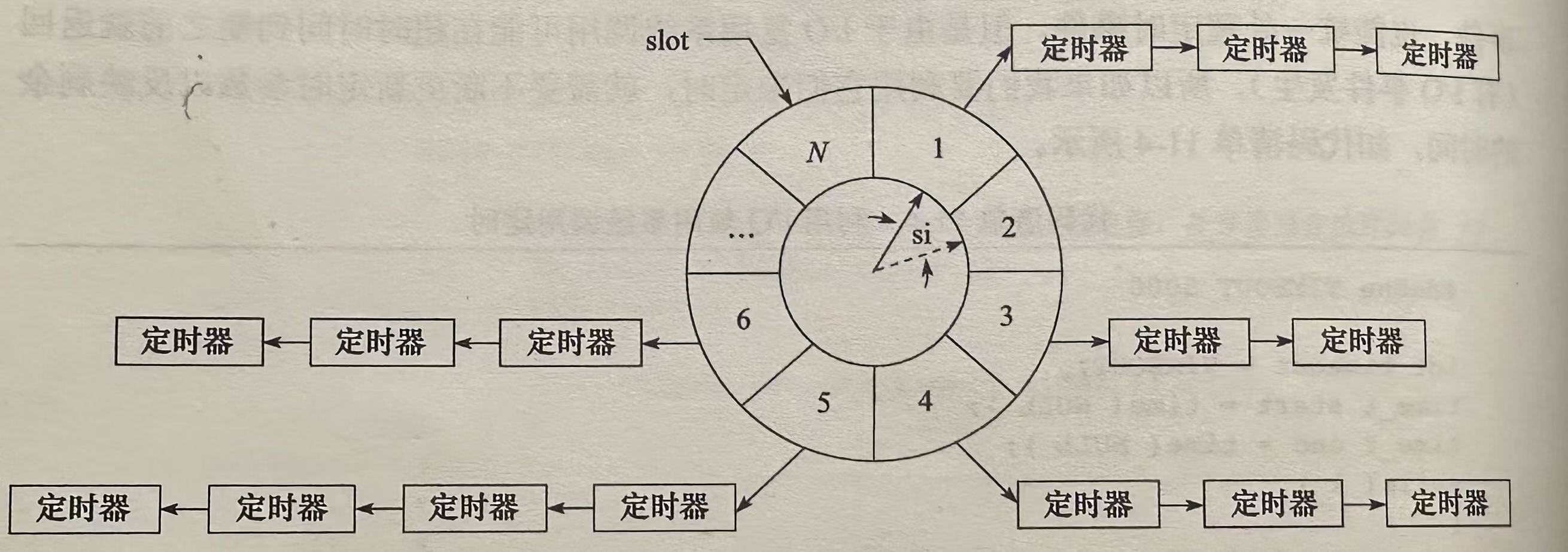
如果时间轮有 N 个槽,每个槽间隔是 SI,那么时间轮转一圈的时间就是 N * SI
例如 N = 60,SI = 1s,那么时间轮转一圈就是 60s
添加一个定时器时,假设当前槽是 cur_slot,定时器超时时间是 timeout
需要先计算它经过多少个 tick 到期:ticks = timeout / SI
然后计算它应该放到哪个槽中:ts = (cur_slot + ticks) % N
如果定时器超时时间超过一圈,还需要记录它要等待几圈:rotation = ticks / N
所以一个定时器节点中通常要保存两个关键字段:
-
time_slot_:表示定时器在哪个槽中 -
rotation_:表示还需要转多少圈才真正到期
三、时间轮实现
1 定时器节点设计
我的定时器节点是 tw_timer
核心代码如下:
class tw_timer {
public:
    tw_timer(int rotation, int time_slot)
        : rotation_(rotation), time_slot_(time_slot), next_(nullptr), prev_(nullptr)
    {}

public:
    int rotation_;
    int time_slot_;
    std::function<void()> cb_func;
    tw_timer* next_;
    tw_timer* prev_;
};
这个节点中主要保存了:
-
rotation_:还需要转多少圈 -
time_slot_:当前定时器所在的槽 -
cb_func:定时器到期后的回调函数 -
next_和prev_:用于组成双向链表
这里使用 std::function<void()> 保存回调,比普通函数指针更灵活,可以直接绑定 lambda、普通函数或者 std::bind
2 时间轮结构设计
我的时间轮类中,核心成员如下:
static const int N = 100
static const int SI = 1
vector<tw_timer *> slots_
int cur_slot_
其中 slots_ 是一个数组,每个元素都是一个定时器链表的头指针
cur_slot_ 表示当前时间轮指针指向哪个槽
在我的实现中,N = 100,SI = 1,表示时间轮有 100 个槽,每个槽的时间间隔是 1 个时间单位
3 添加和触发定时器
添加定时器的核心逻辑是:
tw_timer* add_timer(int timeout) {
    if(timeout < 0) {
        return nullptr;
    }

    int ticks;
    if(timeout < SI) {
        ticks = 1;
    } else {
        ticks = timeout / SI;
    }

    int rotation = ticks / N;
    int ts = (ticks + cur_slot_) % N;

    tw_timer* new_timer = new tw_timer(rotation, ts);

    if(!slots_[ts]) {
        slots_[ts] = new_timer;
    } else {
        new_timer->next_ = slots_[ts];
        slots_[ts]->prev_ = new_timer;
        slots_[ts] = new_timer;
    }

    return new_timer;
}
这段代码的逻辑很清晰:
-
先根据
timeout和SI计算ticks -
再通过
rotation = ticks / N计算需要等待几圈 -
通过
ts = (ticks + cur_slot_) % N计算应该插入哪个槽 -
最后把定时器头插到对应槽的链表中
头插法的好处是插入效率高,添加一个定时器的复杂度接近 O(1)
时间轮推进时,会调用 tick()
void tick() {
    tw_timer* timer = slots_[cur_slot_];

    while(timer) {
        if(timer->rotation_ > 0) {
            timer->rotation_--;
            timer = timer->next_;
            continue;
        }

        timer->cb_func();
        timer = del_timer(timer);
    }

    cur_slot_ = (cur_slot_ + 1) % N;
}
每次 tick() 只处理当前槽上的链表
如果 rotation_ > 0,说明这个定时器虽然在当前槽,但还没有真正到期,只需要执行 rotation_--
如果 rotation_ == 0,说明定时器到期,执行 cb_func(),然后从链表中删除这个节点
四、timerfd + epoll 如何驱动时间轮
时间轮本身只是一个数据结构,它不会自己转动,需要外部周期性触发 tick()
我的测试代码中使用 timerfd 作为时间源,并把 timerfd 加入 epoll
核心流程是:
-
使用
timerfd_create创建定时器 fd -
使用
timerfd_settime设置周期触发时间 -
把
timerfd加入epoll -
当
timerfd可读时,读取触发次数 -
根据触发次数调用对应次数的
wheel->tick()
// 创建 timerfd,每 100ms 触发一次
int timerfd = create_timerfd(100);
if (timerfd == -1) {

	close(epollfd);

	return -1;

}

// 加入 epoll
epoll_addfd(epollfd, timerfd);
epoll_event events[1024];

while (true) {
	int num = epoll_wait(epollfd, events, 1024, -1);
	if (num < 0) {
		if (errno == EINTR) {
			continue;
		}

		perror("epoll_wait");
		break;
	}

	for (int i = 0; i < num; ++i) {
		int sockfd = events[i].data.fd;

		if (sockfd == timerfd && (events[i].events & EPOLLIN)) {
			uint64_t expirations = 0;

			// expirations表示从上次读取到现在,timerfd一共触发了多少次
			ssize_t ret = read(timerfd, &expirations, sizeof(expirations));
			if (ret != sizeof(expirations)) {
				continue;
			}

			for (uint64_t j = 0; j < expirations; ++j) {
				wheel->tick();
			}
		}
	}
}
五、一个需要注意的问题:SI 和 timerfd 间隔要统一
我的时间轮中写的是 SI = 1
但测试代码里创建 timerfd 时使用的是 create_timerfd(100),也就是每 100ms 触发一次
这时要注意单位问题
如果我把 SI = 1 理解成 1 秒,那么 timerfd 应该每 1000ms 触发一次
如果 timerfd 每 100ms 调用一次 tick(),那么 add_timer(10) 实际上不是 10 秒后触发,而是 10 个 tick 后触发,也就是大约 1 秒后触发
所以实际写项目时最好统一单位,比如:
-
规定
SI = 100,表示一个槽间隔是 100ms -
所有
timeout都用毫秒表示 -
timerfd也按照 100ms 周期触发
这样时间含义更清楚,不容易混乱
六、关于时间轮中 N 的意义
我对 N 的理解是:N 类似哈希表中桶的数量
时间轮中的每个槽就像哈希表中的一个桶,定时器会根据过期时间被映射到不同的槽中
如果 N 太小,槽的数量少,定时器就容易集中到同一个槽上,导致某些槽后面的链表很长
这样虽然添加定时器还是接近 O(1),但当时间轮指针转到这个槽时,需要遍历很长的链表,执行效率会下降

openEuler 是由开放原子开源基金会孵化的全场景开源操作系统项目,面向数字基础设施四大核心场景(服务器、云计算、边缘计算、嵌入式),全面支持 ARM、x86、RISC-V、loongArch、PowerPC、SW-64 等多样性计算架构
更多推荐

 11
11 0
0- 0


 已为社区贡献2条内容

所有评论(0)