go语言进阶指南:从基础到高并发编程
前言
在掌握了Go语言的基础知识后,接下来我们将深入探索Go语言的精髓——高并发编程、接口设计、错误处理等进阶特性。这些特性正是Go语言在云计算、微服务领域大放异彩的关键所在。
并发编程:Go的杀手锏
1. Goroutine - 轻量级线程
Goroutine是Go语言并发的基础,它比传统线程更轻量,启动成本极低。
package main

import (
    "fmt"
    "time"
)

// 普通函数
func say(s string) {
    for i := 0; i < 3; i++ {
        time.Sleep(100 * time.Millisecond)
        fmt.Println(s)
    }
}

func main() {
    // 启动goroutine
    go say("world")
    say("hello")
}
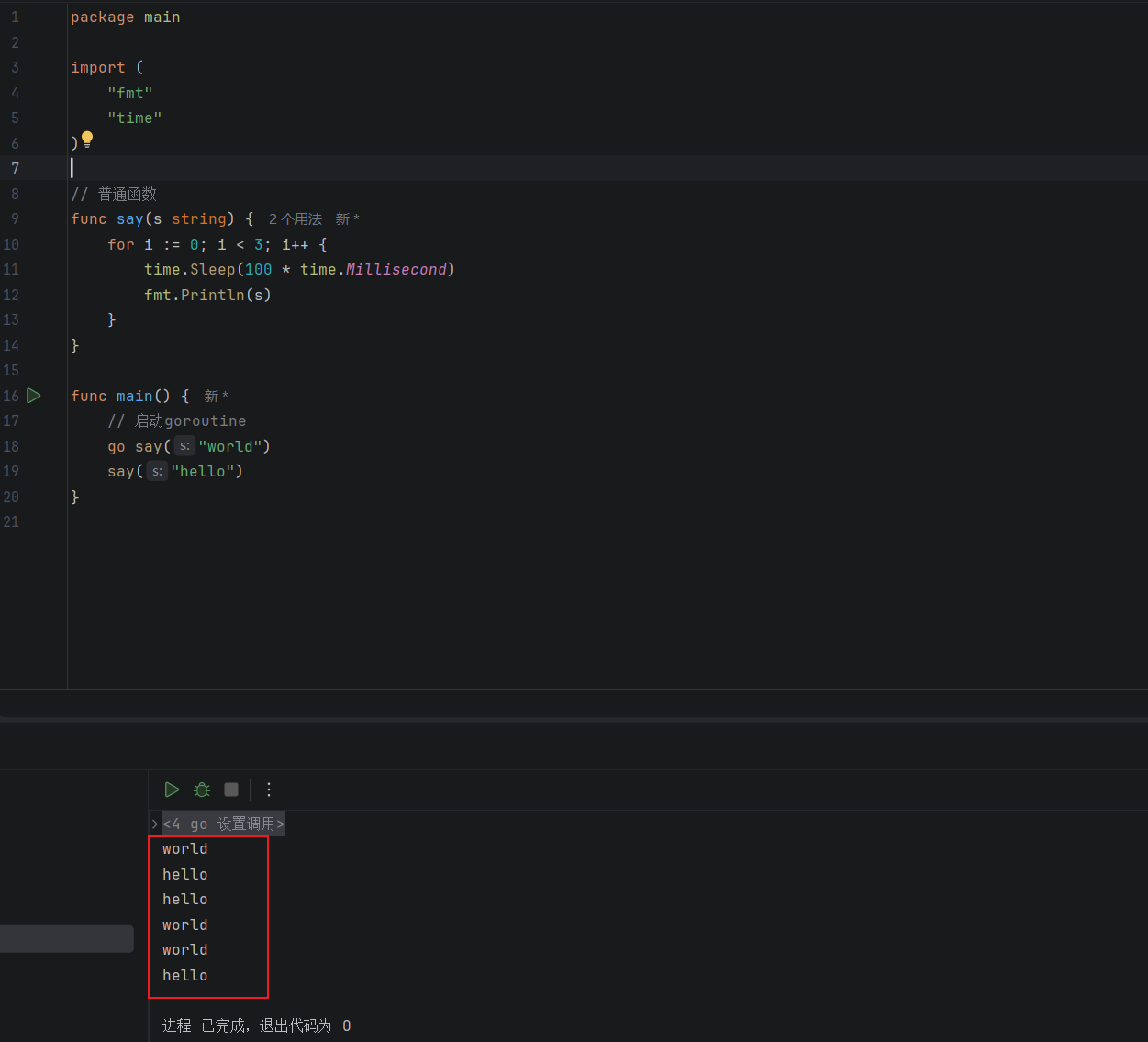
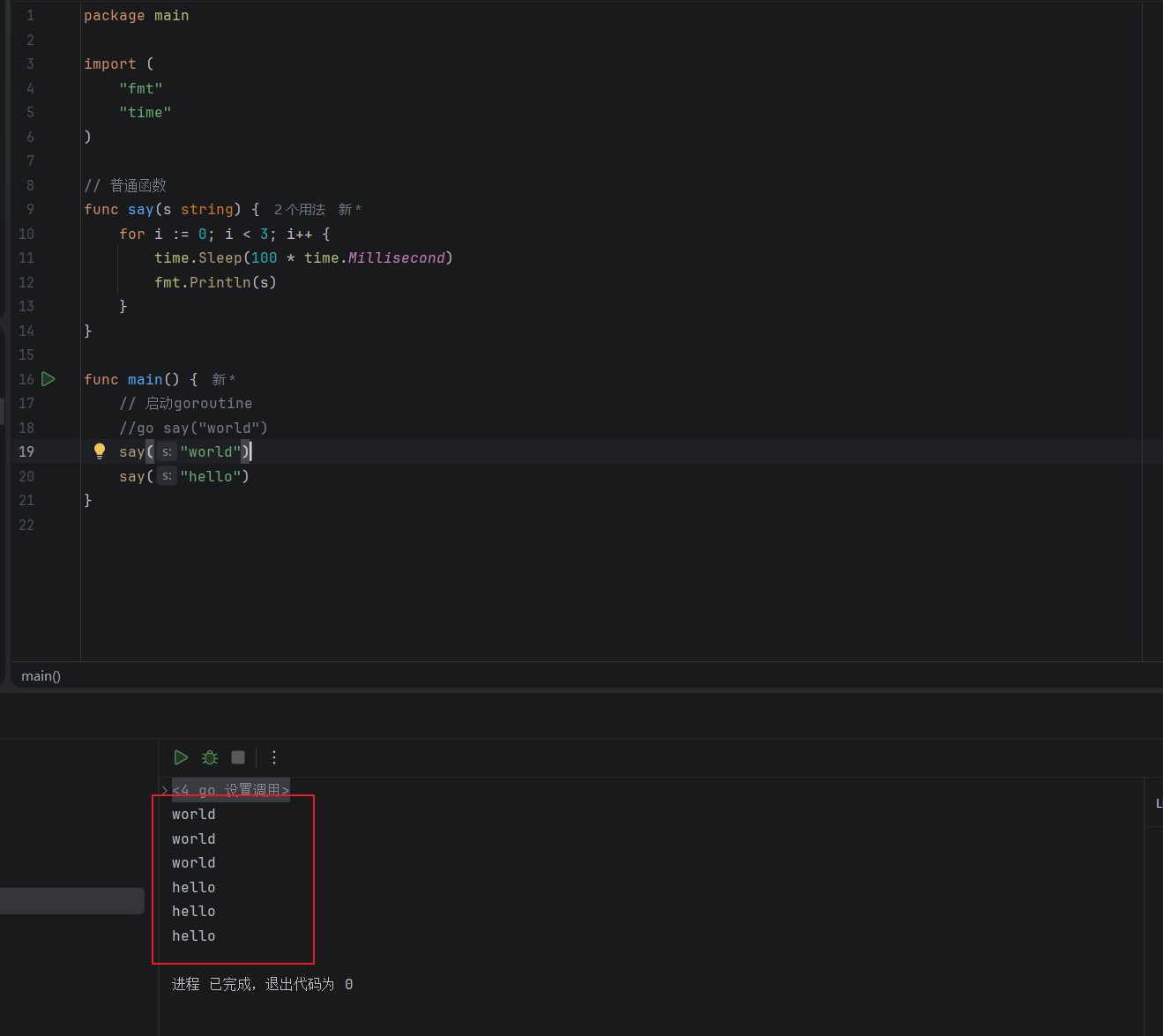
Goroutine特点:
- 由Go运行时管理,而非操作系统
- 初始栈空间仅2KB,可动态增长
- 调度开销极小,可轻松创建数万个
2. Channel - 并发通信的管道
Channel是Goroutine之间通信的管道,遵循CSP(Communicating Sequential Processes)模型。
package main

import "fmt"

func sum(a []int, c chan int) {
    sum := 0
    for _, v := range a {
        sum += v
    }
    c <- sum // 发送数据到channel
}

func main() {
    a := []int{7, 2, 8, -9, 4, 0}

    c := make(chan int)
    go sum(a[:len(a)/2], c)
    go sum(a[len(a)/2:], c)

    x, y := <-c, <-c // 从channel接收数据

    fmt.Println(x, y, x+y)
}
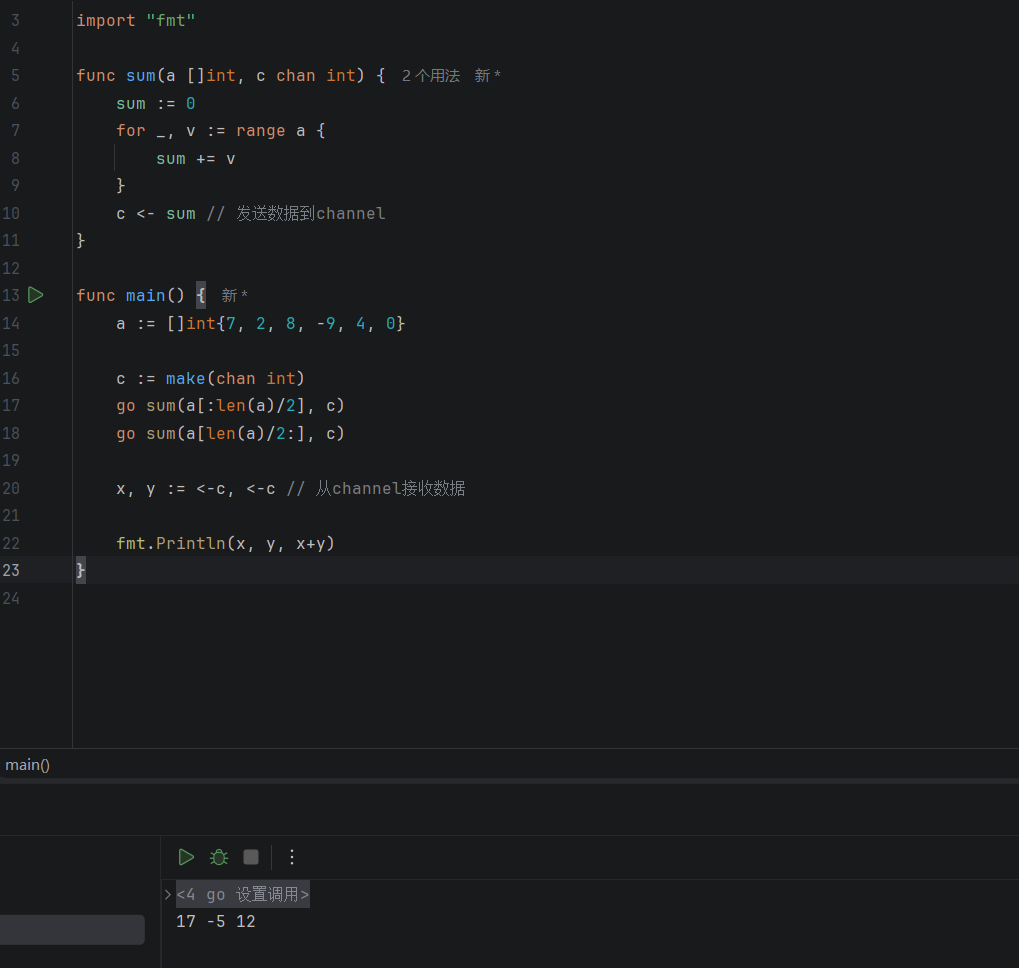
启动:
主程序运行,创建通道 c。 启动 Goroutine A(计算前半段)。 启动 Goroutine B(计算后半段)。
并发计算:
Goroutine A 计算 [7, 2, 8] 的和,结果是 17。 Goroutine B 计算 [-9, 4, 0] 的和,结果是-5。
数据传递:
A 计算完,把 17 塞进通道 c。 B 计算完,把 -5 塞进通道 c。
汇总:
主程序从通道 c 里把 17 和 -5 拿出来。 计算 17 + (-5) = 12。
Channel类型:
- 无缓冲channel:
make(chan int),发送和接收必须同时就绪 - 有缓冲channel:
make(chan int, 10),可存储10个元素
3. Select - 多路复用
Select语句用于处理多个channel操作。
package main

import (
    "fmt"
    "time"
)

func main() {
    c1 := make(chan string)
    c2 := make(chan string)

    go func() {
        time.Sleep(1 * time.Second)
        c1 <- "one"
    }()

    go func() {
        time.Sleep(2 * time.Second)
        c2 <- "two"
    }()

    for i := 0; i < 2; i++ {
        select {
        case msg1 := <-c1:
            fmt.Println("received", msg1)
        case msg2 := <-c2:
            fmt.Println("received", msg2)
        case <-time.After(3 * time.Second):
            fmt.Println("timeout")
        }
    }
}
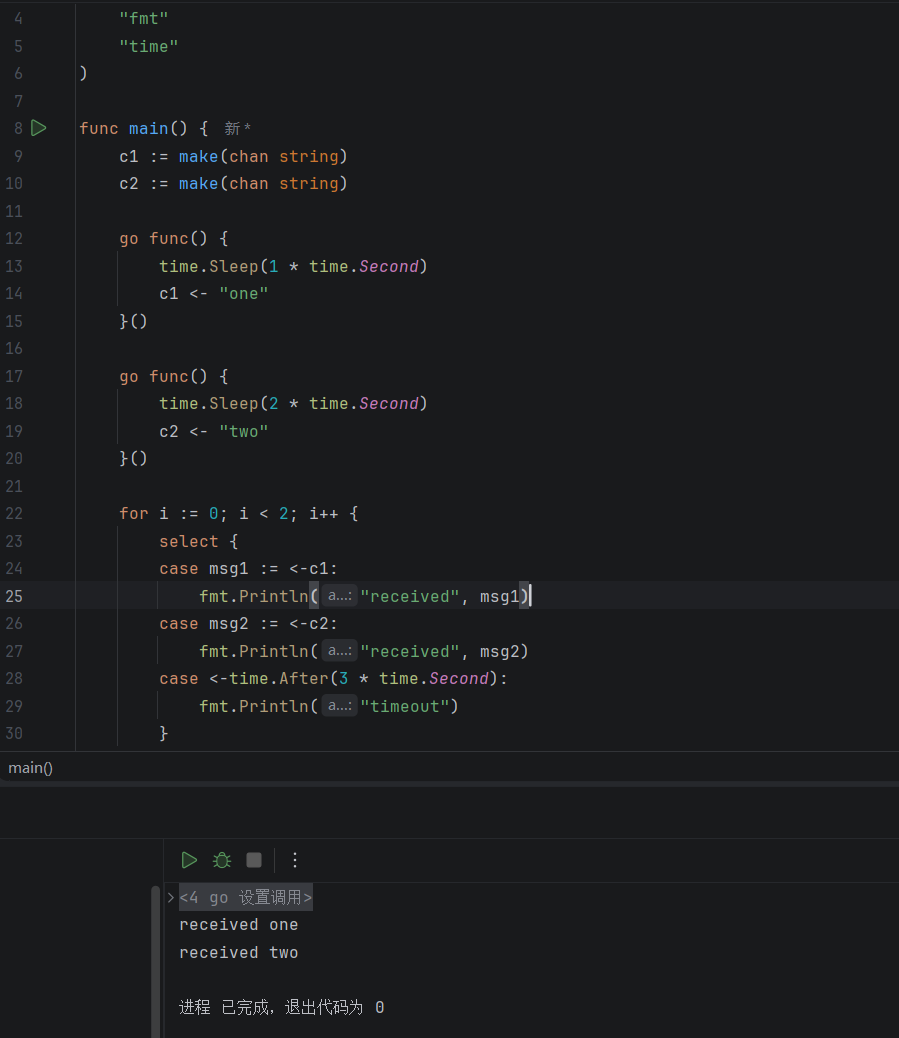
| 时间点 | 事件 |
|---|---|
| 0 秒 | 主程序创建 Channel,启动两个 Goroutine,进入 for 循环第一次 select |
| 0~1 秒 | 两个 Goroutine 都在休眠,c1、c2、time.After 都未就绪,select 阻塞等待 |
| 1 秒 | 第一个 Goroutine 休眠结束,向 c1 发送 "one",c1 就绪 |
| 1 秒 | select 检测到 c1 就绪,执行第一个 case,打印 received one |
| 1~2 秒 | 进入 for 循环第二次 select,此时 c2 还未就绪,继续等待 |
| 2 秒 | 第二个 Goroutine 休眠结束,向 c2 发送 "two",c2 就绪 |
| 2 秒 | select 检测到 c2 就绪,执行第二个 case,打印 received two |
| 2 秒 | 循环结束,程序退出 |
select 多路复用:Go 并发编程的核心模式之一,用于同时监听多个 Channel,实现事件驱动式的并发控制。
time.After()超时模式:这是 Go 中处理超时的惯用写法,在 RPC 调用、网络请求等场景中非常常见。
无缓冲 Channel的同步特性:发送和接收必须配对,天然实现了 Goroutine 之间的同步。
匿名 Goroutine:go func() { …}() 是启动并发任务的简洁写法,适合一次性任务。
接口与面向对象
1. 接口定义与实现
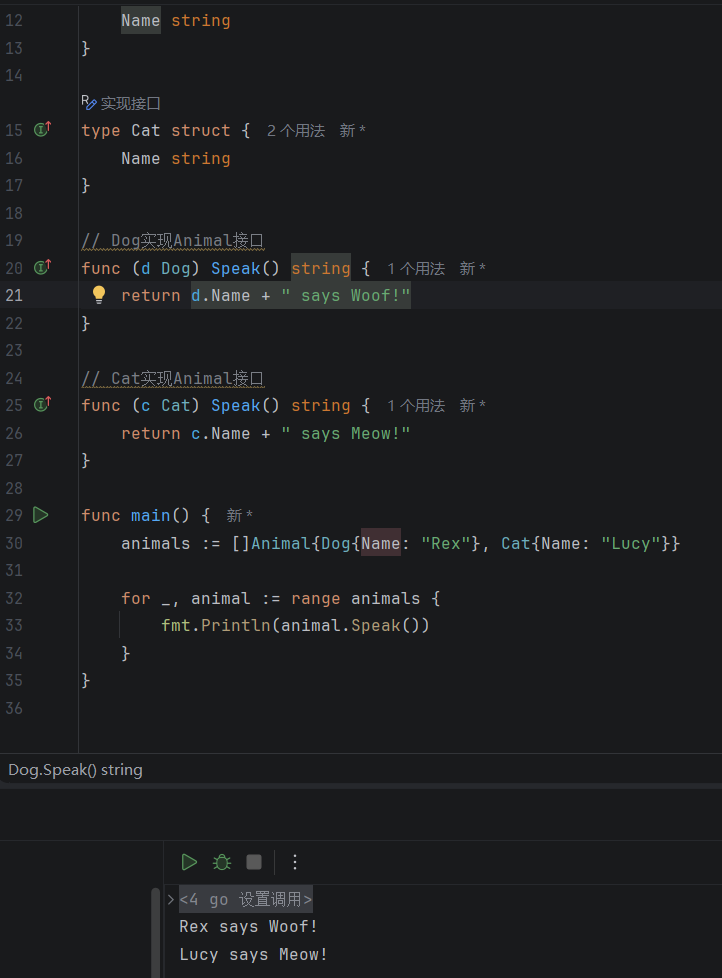
Go语言的接口是隐式实现的,这是Go语言设计的精妙之处。
package main

import "fmt"

// 定义接口
type Animal interface {
    Speak() string
}

// 实现接口的结构体
type Dog struct {
    Name string
}

type Cat struct {
    Name string
}

// Dog实现Animal接口
func (d Dog) Speak() string {
    return d.Name + " says Woof!"
}

// Cat实现Animal接口
func (c Cat) Speak() string {
    return c.Name + " says Meow!"
}

func main() {
    animals := []Animal{Dog{Name: "Rex"}, Cat{Name: "Lucy"}}

    for _, animal := range animals {
        fmt.Println(animal.Speak())
    }
}
2. 空接口与类型断言
空接口interface{}可以存储任何类型的值。
package main

import "fmt"

func describe(i interface{}) {
    // 类型断言
    switch v := i.(type) {
    case int:
        fmt.Printf("Integer: %d\n", v)
    case string:
        fmt.Printf("String: %s\n", v)
    case Animal:
        fmt.Printf("Animal: %s\n", v.Speak())
    default:
        fmt.Printf("Unknown type: %T\n", v)
    }
}

func main() {
    describe(42)
    describe("Hello")
    describe(Dog{Name: "Buddy"})
}
错误处理与异常
1. 多返回值错误处理
Go语言推崇通过返回值来处理错误,而非异常机制。
package main

import (
    "errors"
    "fmt"
)

// 自定义错误
func divide(a, b float64) (float64, error) {
    if b == 0 {
        return 0, errors.New("division by zero")
    }
    return a / b, nil
}

func main() {
    result, err := divide(10, 0)
    if err != nil {
        fmt.Println("Error:", err)
        return
    }
    fmt.Println("Result:", result)
}
2. Panic与Recover
用于处理真正的异常情况。
package main

import "fmt"

func safeDivide(a, b int) {
    defer func() {
        if r := recover(); r != nil {
            fmt.Println("Recovered from panic:", r)
        }
    }()

    if b == 0 {
        panic("division by zero")
    }

    fmt.Println(a / b)
}

func main() {
    safeDivide(10, 0)
    fmt.Println("Program continues...")
}
测试与性能优化
1. 单元测试
Go语言内置了强大的测试框架。
// math.go
package main

func Add(a, b int) int {
    return a + b
}

func Multiply(a, b int) int {
    return a * b
}
// math_test.go
package main

import "testing"

func TestAdd(t *testing.T) {
    result := Add(2, 3)
    if result != 5 {
        t.Errorf("Add(2,3) = %d; want 5", result)
    }
}

func TestMultiply(t *testing.T) {
    result := Multiply(2, 3)
    if result != 6 {
        t.Errorf("Multiply(2,3) = %d; want 6", result)
    }
}
运行测试:
go test
go test -v # 详细模式
go test -cover # 测试覆盖率
2. 性能分析
使用pprof进行性能分析。
package main

import (
    "net/http"
    _ "net/http/pprof"
    "time"
)

func heavyFunction() {
    for i := 0; i < 100000000; i++ {
        _ = i * i
    }
}

func main() {
    // 启动pprof服务
    go func() {
        http.ListenAndServe("localhost:6060", nil)
    }()

    heavyFunction()
    time.Sleep(time.Second * 10)
}
分析命令:
# CPU分析
go tool pprof http://localhost:6060/debug/pprof/profile?seconds=30

# 内存分析
go tool pprof http://localhost:6060/debug/pprof/heap
实战项目:并发Web爬虫
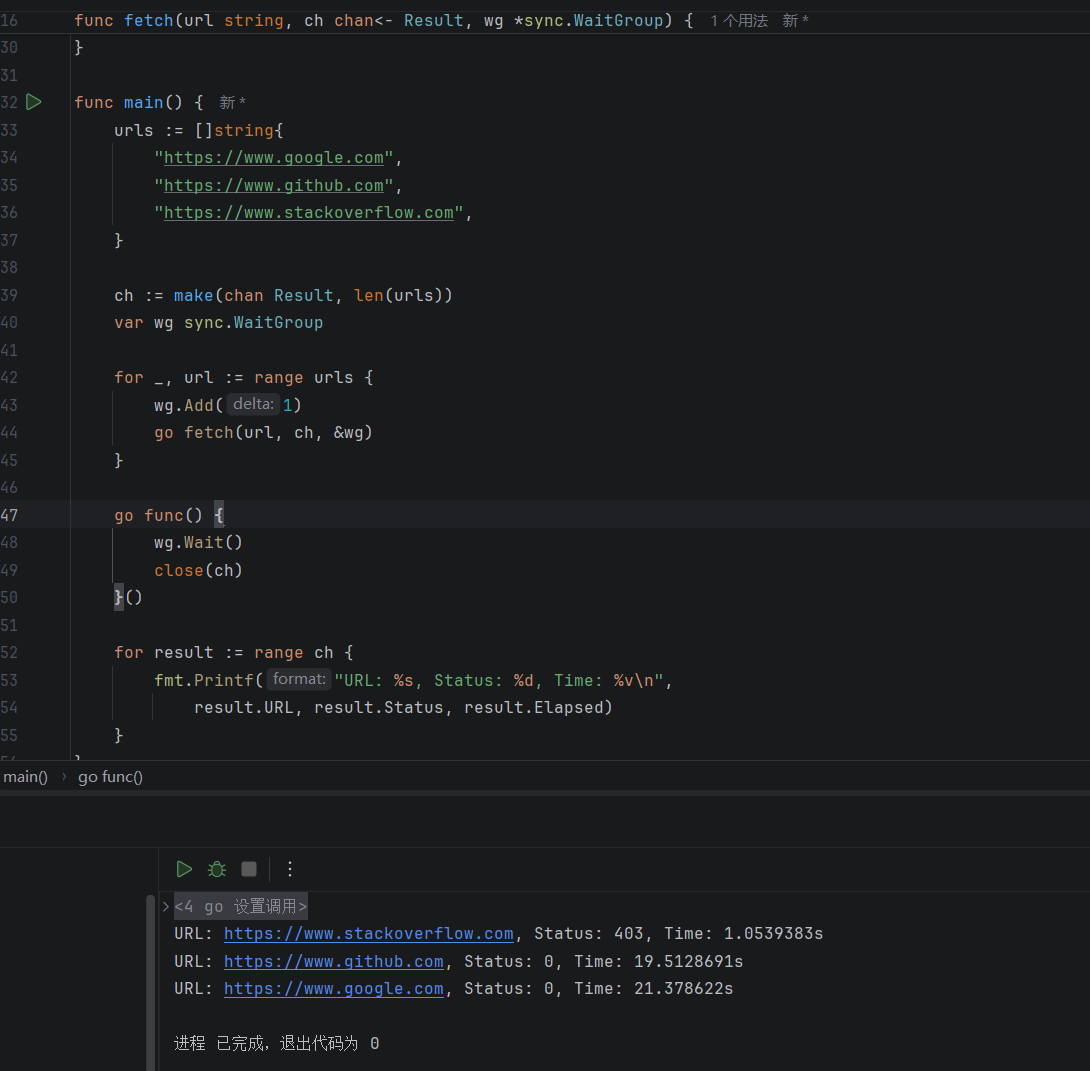
让我们用所学知识构建一个简单的并发Web爬虫。
package main

import (
    "fmt"
    "net/http"
    "sync"
    "time"
)

type Result struct {
    URL     string
    Status  int
    Elapsed time.Duration
}

func fetch(url string, ch chan<- Result, wg *sync.WaitGroup) {
    defer wg.Done()

    start := time.Now()
    resp, err := http.Get(url)
    elapsed := time.Since(start)

    if err != nil {
        ch <- Result{URL: url, Status: 0, Elapsed: elapsed}
        return
    }

    ch <- Result{URL: url, Status: resp.StatusCode, Elapsed: elapsed}
    resp.Body.Close()
}

func main() {
    urls := []string{
        "https://www.google.com",
        "https://www.github.com",
        "https://www.stackoverflow.com",
    }

    ch := make(chan Result, len(urls))
    var wg sync.WaitGroup

    for _, url := range urls {
        wg.Add(1)
        go fetch(url, ch, &wg)
    }

    go func() {
        wg.Wait()
        close(ch)
    }()

    for result := range ch {
        fmt.Printf("URL: %s, Status: %d, Time: %v\n",
            result.URL, result.Status, result.Elapsed)
    }
}
总结与学习路径
核心要点回顾
- 并发模型:Goroutine + Channel + Select 是Go并发的三大法宝
- 接口设计:隐式实现接口,推崇组合而非继承
- 错误处理:多返回值处理错误,panic/recover处理异常
- 测试工具:内置测试框架,强大的性能分析工具

openEuler 是由开放原子开源基金会孵化的全场景开源操作系统项目,面向数字基础设施四大核心场景(服务器、云计算、边缘计算、嵌入式),全面支持 ARM、x86、RISC-V、loongArch、PowerPC、SW-64 等多样性计算架构
更多推荐

 1
1 0
0- 0


 已为社区贡献3条内容

所有评论(0)