OS31.【Linux】文件IO (2) 文件描述符
目录
1.知识回顾
参见OS29.【Linux】文件IO (1) open、write和close系统调用文章
2.文件描述符
提出问题:FILE*和文件描述符fd有什么关系?
操作系统管理大量文件需要先描述再组织,而描述文件的各个属性需要结构体struct file,通常直接或间接包含以下信息:
1.在磁盘中的位置
2.基本属性(权限、大小、读写位置、谁打开的、......)
3.文件的内核缓冲区信息
4.struct file* next 指针
struct file* next指针用于串联打开的文件(链表结构),便于操作系统增删查改文件,其结构体的定义在在linux内核v6.16.4的include/linux/fs.h中:
/**
 * struct file - Represents a file
 * @f_lock: Protects f_ep, f_flags. Must not be taken from IRQ context.
 * @f_mode: FMODE_* flags often used in hotpaths
 * @f_op: file operations
 * @f_mapping: Contents of a cacheable, mappable object.
 * @private_data: filesystem or driver specific data
 * @f_inode: cached inode
 * @f_flags: file flags
 * @f_iocb_flags: iocb flags
 * @f_cred: stashed credentials of creator/opener
 * @f_owner: file owner
 * @f_path: path of the file
 * @f_pos_lock: lock protecting file position
 * @f_pipe: specific to pipes
 * @f_pos: file position
 * @f_security: LSM security context of this file
 * @f_wb_err: writeback error
 * @f_sb_err: per sb writeback errors
 * @f_ep: link of all epoll hooks for this file
 * @f_task_work: task work entry point
 * @f_llist: work queue entrypoint
 * @f_ra: file's readahead state
 * @f_freeptr: Pointer used by SLAB_TYPESAFE_BY_RCU file cache (don't touch.)
 * @f_ref: reference count
 */
struct file {
	spinlock_t			f_lock;
	fmode_t				f_mode;
	const struct file_operations	*f_op;
	struct address_space		*f_mapping;
	void				*private_data;
	struct inode			*f_inode;
	unsigned int			f_flags;
	unsigned int			f_iocb_flags;
	const struct cred		*f_cred;
	struct fown_struct		*f_owner;
	/* --- cacheline 1 boundary (64 bytes) --- */
	struct path			f_path;
	union {
		/* regular files (with FMODE_ATOMIC_POS) and directories */
		struct mutex		f_pos_lock;
		/* pipes */
		u64			f_pipe;
	};
	loff_t				f_pos;
#ifdef CONFIG_SECURITY
	void				*f_security;
#endif
	/* --- cacheline 2 boundary (128 bytes) --- */
	errseq_t			f_wb_err;
	errseq_t			f_sb_err;
#ifdef CONFIG_EPOLL
	struct hlist_head		*f_ep;
#endif
	union {
		struct callback_head	f_task_work;
		struct llist_node	f_llist;
		struct file_ra_state	f_ra;
		freeptr_t		f_freeptr;
	};
	file_ref_t			f_ref;
	/* --- cacheline 3 boundary (192 bytes) --- */
} __randomize_layout
  __attribute__((aligned(4)));	/* lest something weird decides that 2 is OK */
访问文件的本质
在OS29.【Linux】文件IO (1) open、write和close系统调用文章提到过:
文件打开需要借助进程,可以推出:Linux的task_struct必定含有与文件相关的指针(task_struct的完整代码参见OS17.【Linux】进程基础知识(1)文章),这里摘取一部分:
struct task_struct
{
    //......
    struct files_struct	*files;
    //......
{在linux内核v6.16.4的include/linux/fdtable.h中,有定义"打开的文件的表结构"
/*
 * Open file table structure
 */
struct files_struct {
  /*
   * read mostly part
   */
	atomic_t count;
	bool resize_in_progress;
	wait_queue_head_t resize_wait;

	struct fdtable __rcu *fdt;
	struct fdtable fdtab;
  /*
   * written part on a separate cache line in SMP
   */
	spinlock_t file_lock ____cacheline_aligned_in_smp;
	unsigned int next_fd;
	unsigned long close_on_exec_init[1];
	unsigned long open_fds_init[1];
	unsigned long full_fds_bits_init[1];
	struct file __rcu * fd_array[NR_OPEN_DEFAULT];
};
这里只研究struct file __rcu * fd_array[NR_OPEN_DEFAULT],__rcu是修饰符,这里不讨论,NR_OPEN_DEFAULT宏是fd_array的初始化fd_array元素的个数
现简化处理files_struct,认为只含有fd_array:
fd_array顾名思义,是存放struct file*的的数组,有下图:
struct file(注在include/linux/fs.h中定义了struct file)对象之间会用链式结构串联起来.方便增删查改
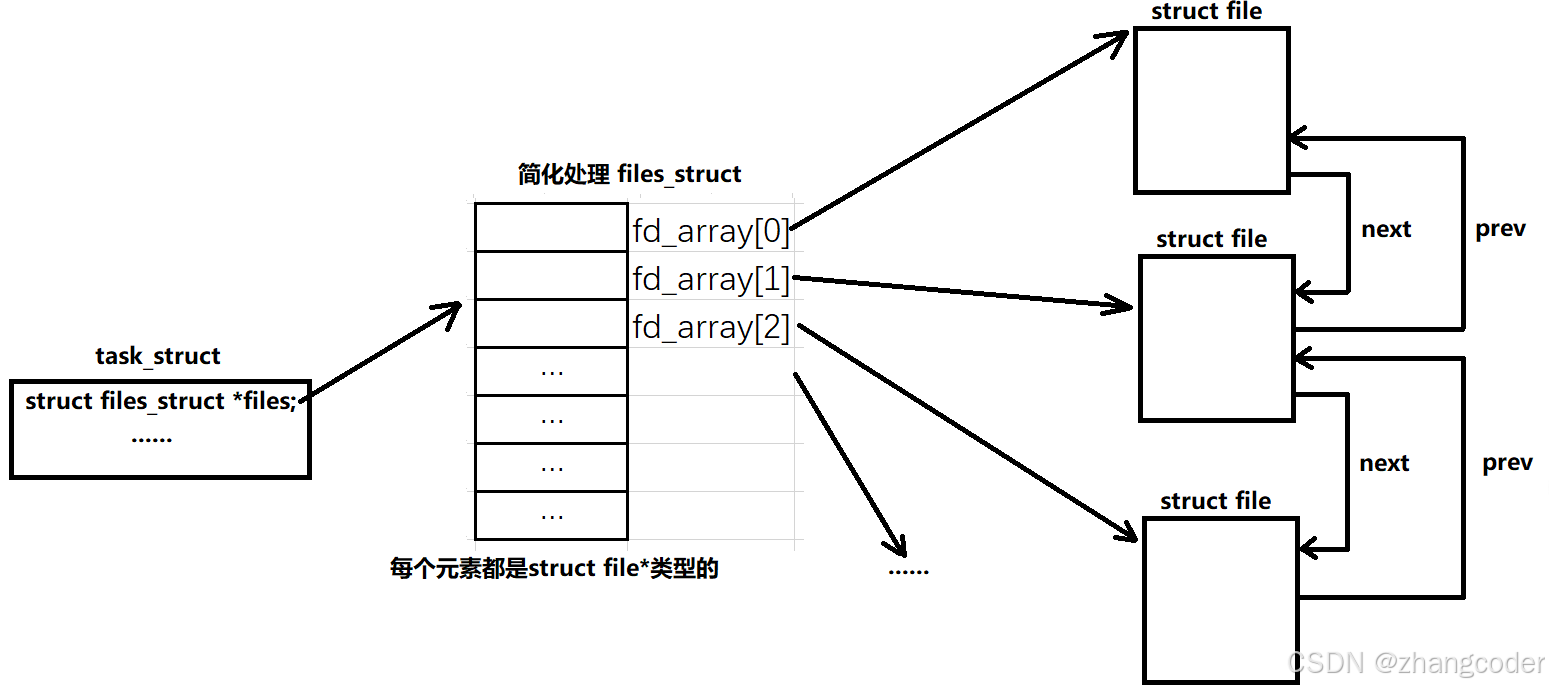
进程每打开一个文件时,open内部会将这个文件的struct file的指针添加到fd_array中,并返回fd_array下标
int open(const char *pathname, int flags, ... /* mode_t mode */ );fd的数值分配规则
例如以下代码:
#include <stdio.h>
#include <unistd.h>
#include <fcntl.h>
#include <sys/stat.h>
int main()
{
	umask(0);
	int fd1=open("test1.txt",O_WRONLY|O_CREAT|O_APPEND,0666);
    if (fd1<0)
    {
        perror("open failed");
        return -1;
    }
	int fd2=open("test2.txt",O_WRONLY|O_CREAT|O_APPEND,0666);
    if (fd2<0)
    {
        perror("open failed");
        return -1;
    }
	int fd3=open("test3.txt",O_WRONLY|O_CREAT|O_APPEND,0666);
    if (fd3<0)
    {
        perror("open failed");
        return -1;
    }
	printf("test1.txt fd=%d\n",fd1);
	printf("test2.txt fd=%d\n",fd2);
	printf("test3.txt fd=%d\n",fd3);
    close(fd1);
    close(fd2);
    close(fd3);
	return 0;
}
运行结果:
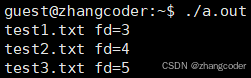
规则1、规则2
规则1.打开的文件默认从3开始编号
规则2.fd=0、1、2默认被占用,因为进程默认打开3个IO流,不是C语言的特性
stdin: 键盘文件
stdout: 显示器文件
stderr: 显示器文件
可以用和read和write函数尝试向这些流写入:
#include <stdio.h>
#include <unistd.h>
#include <fcntl.h>
#include <sys/stat.h>
#include <string.h>
#define BUFFER_SIZE 20
#define STDIN_STR 20
int main()
{
	//默认打开3个流,不需要手动open
    char buffer[BUFFER_SIZE];
    char* msg1="stdout\n";
    char* msg2="stderr\n";
    char stdin_str[STDIN_STR];
    ssize_t len=read(0,stdin_str,BUFFER_SIZE);
    stdin_str[len]='\0';
    write(1,stdin_str,strlen(stdin_str));
    write(1,msg1,strlen(msg1));
    write(2,msg2,strlen(msg2));
	return 0;
}
运行结果:
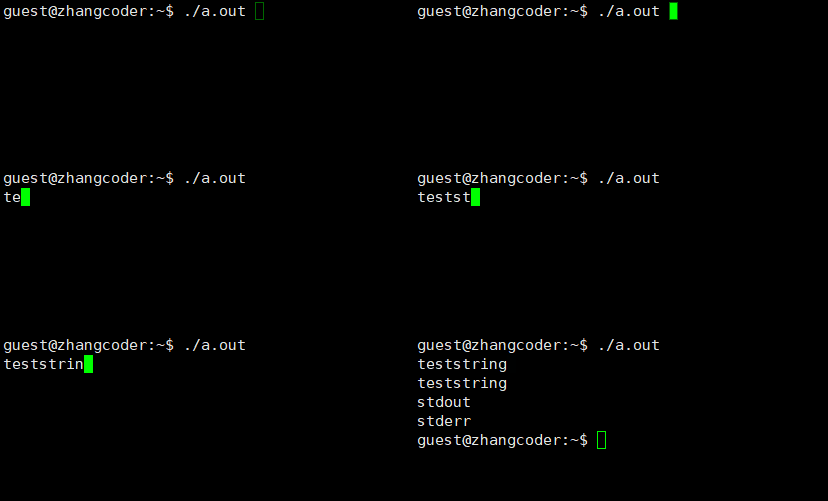
解释:使用read系统调用将显示器文件中的字符串写入到stdin_str中(一开始会阻塞,因为在等待用户输入),read返回值如果大于0,那么表示实际读取的字符数,要想能打印字符串,必须先为stdin_str的结尾添加\0.然后将stdin_str的字符串写入到stdin中打印
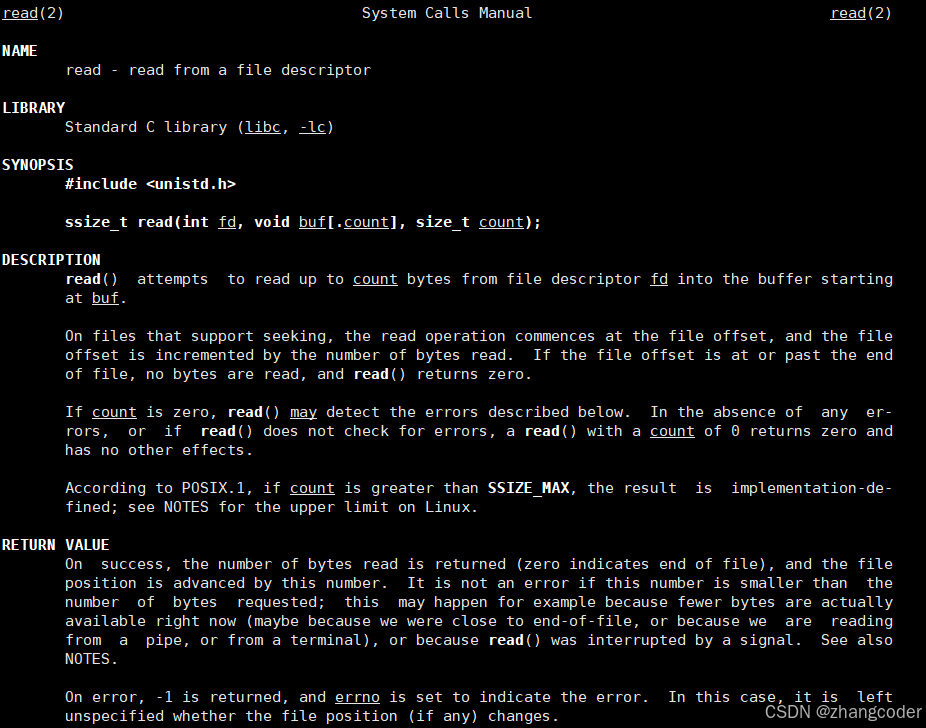
write(1,msg1,strlen(msg1))和write(2,msg2,strlen(msg2))都像显示器写入字符串
注意:虽然C语言的三个流是FILE类型的,但在操作系统层面上只认识fd
说明fd=0是stdout,而fd=1是stderr在之后的文章会证明
★规则3
先关闭0号文件描述符指向的struct file,再新建一个文件
#include <stdio.h>
#include <unistd.h>
#include <fcntl.h>
#include <sys/stat.h>
int main()
{
    close(0);
	umask(0);
	int fd=open("test.txt",O_WRONLY|O_CREAT|O_APPEND,0666);
    if (fd<0)
    {
        perror("open failed");
        return -1;
    }
	printf("test.txt fd=%d\n",fd);
    close(fd);
	return 0;
}
运行结果:

先关闭2号文件描述符指向的struct file,再新建一个文件
#include <stdio.h>
#include <unistd.h>
#include <fcntl.h>
#include <sys/stat.h>
int main()
{
    close(2);
	umask(0);
	int fd=open("test.txt",O_WRONLY|O_CREAT|O_APPEND,0666);
    if (fd<0)
    {
        perror("open failed");
        return -1;
    }
	printf("test.txt fd=%d\n",fd);
    close(fd);
	return 0;
}
运行结果:

从这两段代码可以看出: close(0),打印的是0; close(2),打印的是2…..
得出规则3: 设置文件的描述符时,从0下标开始,寻找最小的没有用的数组位置,它的下标就是新文件的文件描述符
FILE结构体
上面提到了"虽然C语言的三个流是FILE类型的,但在操作系统层面上只认识fd",为了让FILE结构体与操作系统交互,FILE结构体内部必然含有fd
注意:FILE结构体和内核的file结构体没有任何关系
查看gilbc-2.42的源代码:
在libio/bits/types/FILE.h中:
#ifndef __FILE_defined
#define __FILE_defined 1

struct _IO_FILE;

/* The opaque type of streams.  This is the definition used elsewhere.  */
typedef struct _IO_FILE FILE;

#endif
FILE实际上是struct _IO_FILE的别名
在libio/bits/types/struct_FILE.h中:
/* The tag name of this struct is _IO_FILE to preserve historic
   C++ mangled names for functions taking FILE* arguments.
   That name should not be used in new code.  */
struct _IO_FILE
{
  int _flags;		/* High-order word is _IO_MAGIC; rest is flags. */

  /* The following pointers correspond to the C++ streambuf protocol. */
  char *_IO_read_ptr;	/* Current read pointer */
  char *_IO_read_end;	/* End of get area. */
  char *_IO_read_base;	/* Start of putback+get area. */
  char *_IO_write_base;	/* Start of put area. */
  char *_IO_write_ptr;	/* Current put pointer. */
  char *_IO_write_end;	/* End of put area. */
  char *_IO_buf_base;	/* Start of reserve area. */
  char *_IO_buf_end;	/* End of reserve area. */

  /* The following fields are used to support backing up and undo. */
  char *_IO_save_base; /* Pointer to start of non-current get area. */
  char *_IO_backup_base;  /* Pointer to first valid character of backup area */
  char *_IO_save_end; /* Pointer to end of non-current get area. */

  struct _IO_marker *_markers;

  struct _IO_FILE *_chain;

  int _fileno;
  int _flags2:24;
  /* Fallback buffer to use when malloc fails to allocate one.  */
  char _short_backupbuf[1];
  __off_t _old_offset; /* This used to be _offset but it's too small.  */

  /* 1+column number of pbase(); 0 is unknown. */
  unsigned short _cur_column;
  signed char _vtable_offset;
  char _shortbuf[1];

  _IO_lock_t *_lock;
#ifdef _IO_USE_OLD_IO_FILE
};里面有一个int _fileno,这是文件描述符
因为stdin、stdout和stderr本身是结构体指针类型,所以可以使用->来打印_fileno对应的值:
验证stdin、stdout、stderr对应的文件描述符
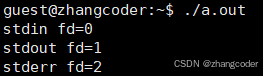
方法1:使用_fileno
#include <stdio.h>
int main()
{
    printf("stdin fd=%d\n",stdin->_fileno);
    printf("stdout fd=%d\n",stdout->_fileno);
    printf("stderr fd=%d\n",stderr->_fileno);
	return 0;
}
运行结果:
方法2: 使用fileno()
当然,也可以使用stdio.h中的fileno()内部的宏来获取fd值:
声明:
int fileno(FILE *stream);例如:
#include <stdio.h>
int main()
{
    printf("stdin fd=%d\n",fileno(stdin));
	return 0;
}
运行结果:

细心的读者可能回去看glibc库中的实现,在glibc-2.42的/libio/fileno.c提供了__fileno的实现:
#include "libioP.h"
#include <stdio.h>

int
__fileno (FILE *fp)
{
  CHECK_FILE (fp, EOF);

  if (!(fp->_flags & _IO_IS_FILEBUF) || _IO_fileno (fp) < 0)
    {
      __set_errno (EBADF);
      return -1;
    }

  return _IO_fileno (fp);
}
libc_hidden_def (__fileno)
weak_alias (__fileno, fileno)
libc_hidden_weak (fileno)

/* The fileno implementation for libio does not require locking because
   it only accesses once a single variable and this is already atomic
   (at least at thread level).  Therefore we don't test _IO_MTSAFE_IO here.  */

weak_alias (__fileno, fileno_unlocked)如果没问题的话,会执行宏_IO_fileno (fp)
这个宏在/libio/iolibio.h中:
#define _IO_fileno(FP) ((FP)->_fileno)
extern FILE* _IO_popen (const char*, const char*) __THROW;
方法3:查看/dev目录下的文件
ls -l /dev运行结果:

引用计数
一个文件可以被多个进程打开,那么该文件的struct file中专门有一个变量来记录有多少个进程打开了这个文件,这是引用计数
1. 如果有N个文件描述符指向该文件, 那么struct file的引用计数变量的大小等于N
2.如果某个文件的引用计数变量值为0,那么内核才会真正执行关闭文件的操作,回收struct file对象,文将件指针置为NULL
3.拓展阅读
linux应用层的write()函数如何调用到驱动中的write()函数?作者: 简叔
4.补充练习题
Linux下两个进程可以同时打开同一个文件,这时如下描述错误的是:
1.一个进程对文件长度和内容的修改另外一个进程可以立即感知 ( )
2.任何一个进程删除该文件时,另外一个进程会立即出现读写失败 ( )
答案:
1.正确
因为文件内容的修改是直接反馈至磁盘文件系统中的,因此当文件内容被修改,其他进程因为也是针对磁盘数据的操作,因此可以立即感知到
可以做个测试:
#include <stdio.h>
#include <sys/types.h>
#include <sys/stat.h>
#include <fcntl.h>
#include <unistd.h>
int main()
{
    int fd=open("./file.txt",O_CREAT|O_WRONLY,0664);
    if (fd<0)
    {
        perror("open failed");
        return 1;
    }
    char buffer[]="teststring";
    for (;;)
    {
        if (write(fd,buffer,sizeof(buffer)-1)==-1)
        {
            perror("open failed");
            return 2;
        }
        printf("写入了字符串\n");
        fflush(stdout);
        sleep(1);
    }
    close(fd);
    return 0;
}
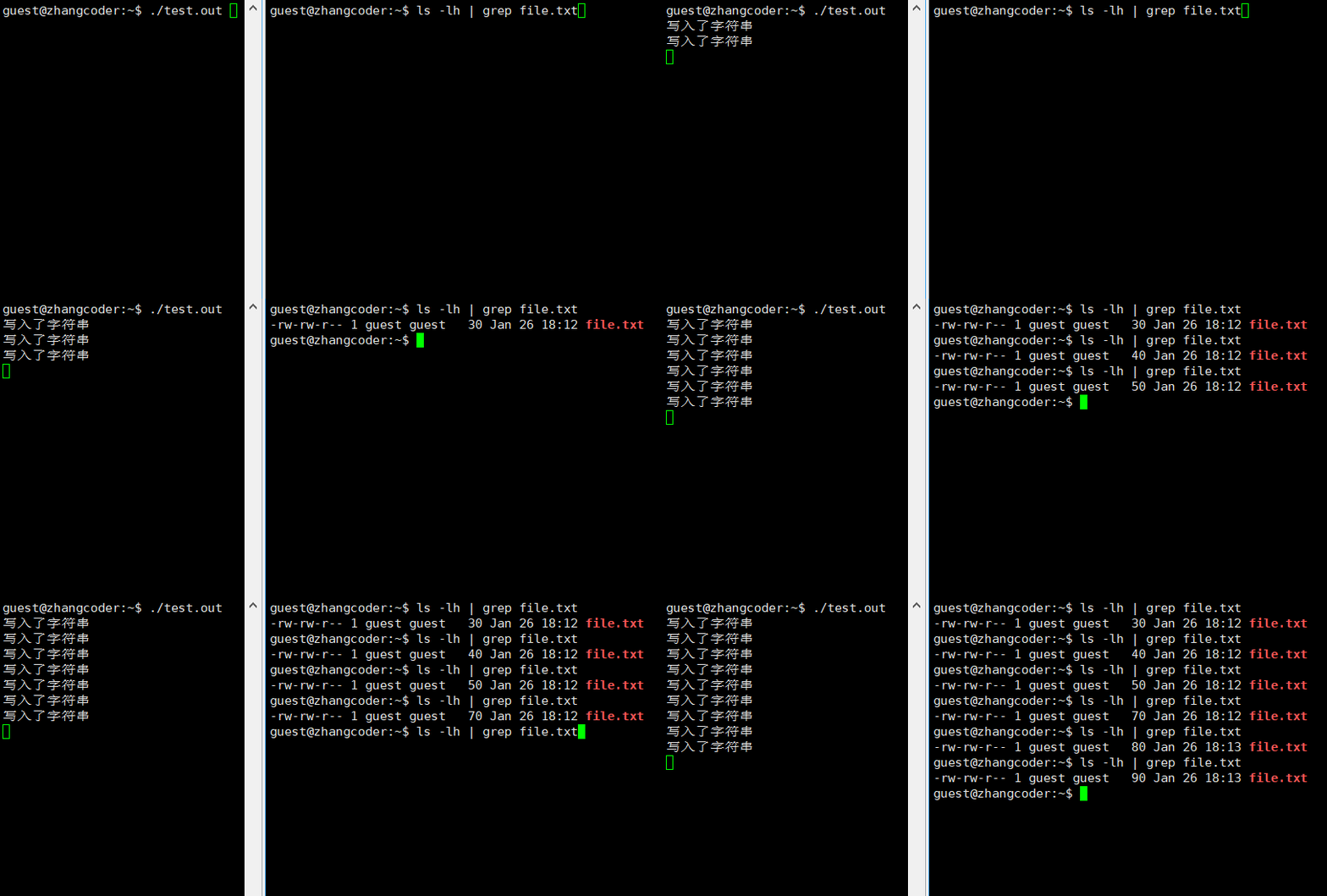
开两个终端,一个执行以上代码,另外一个查看file.txt大小
运行结果:打印出来文件大小一直在变
2.正确
删除文件实际上一开始是删除文件的目录项,文件的数据以及inode并不会立即被删除,因为进程打开
文件的struct file数据结构仍然存在因此若进程已经打开文件,文件被删除时,并不会影响进程的操作,因为进程已经具备文件的描述信息
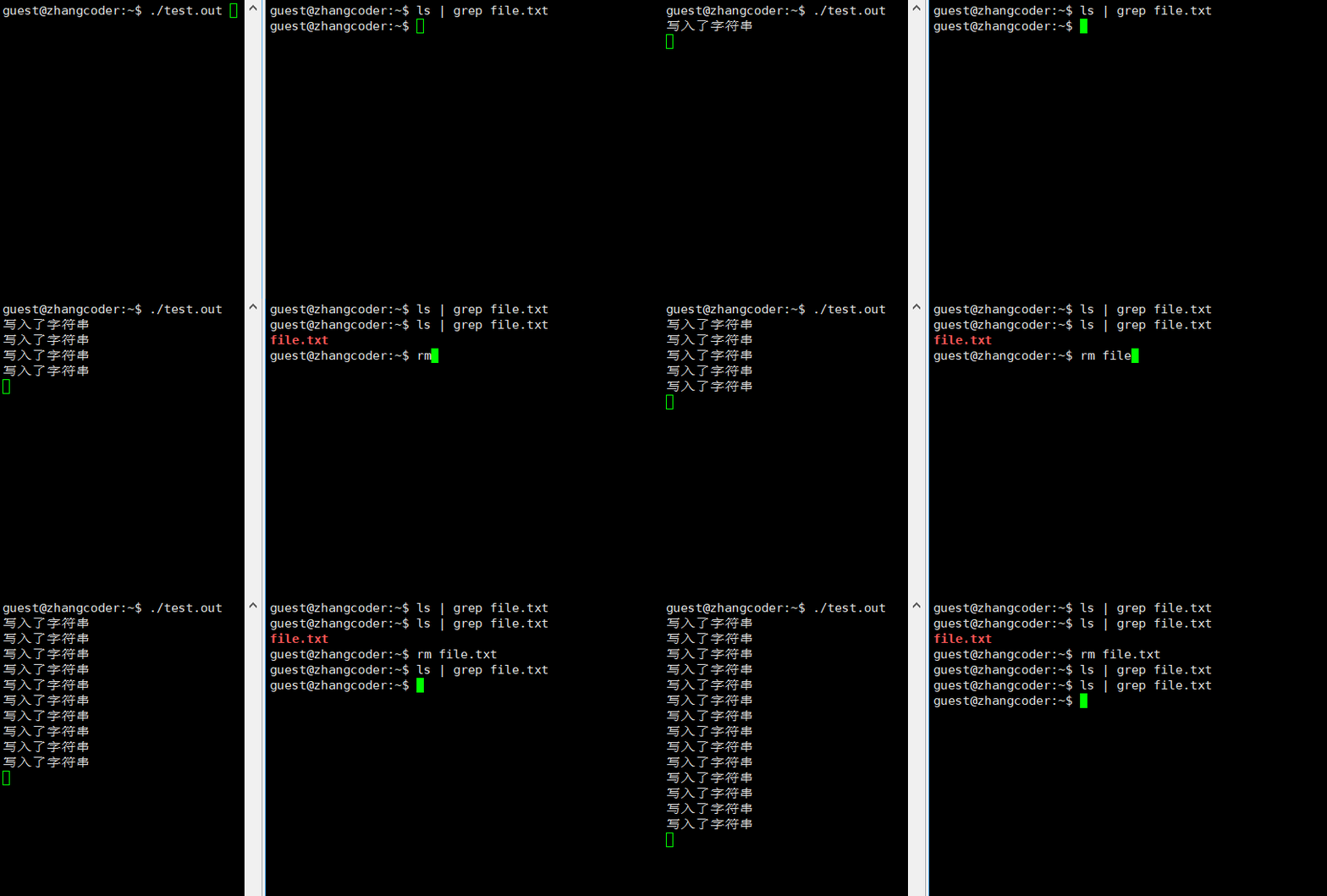
仍然使用上面的代码,开两个终端,一个执行以上代码,另外一个执行rm file.txt
运行结果: 正常删除
5.补充: Linux的终端文件
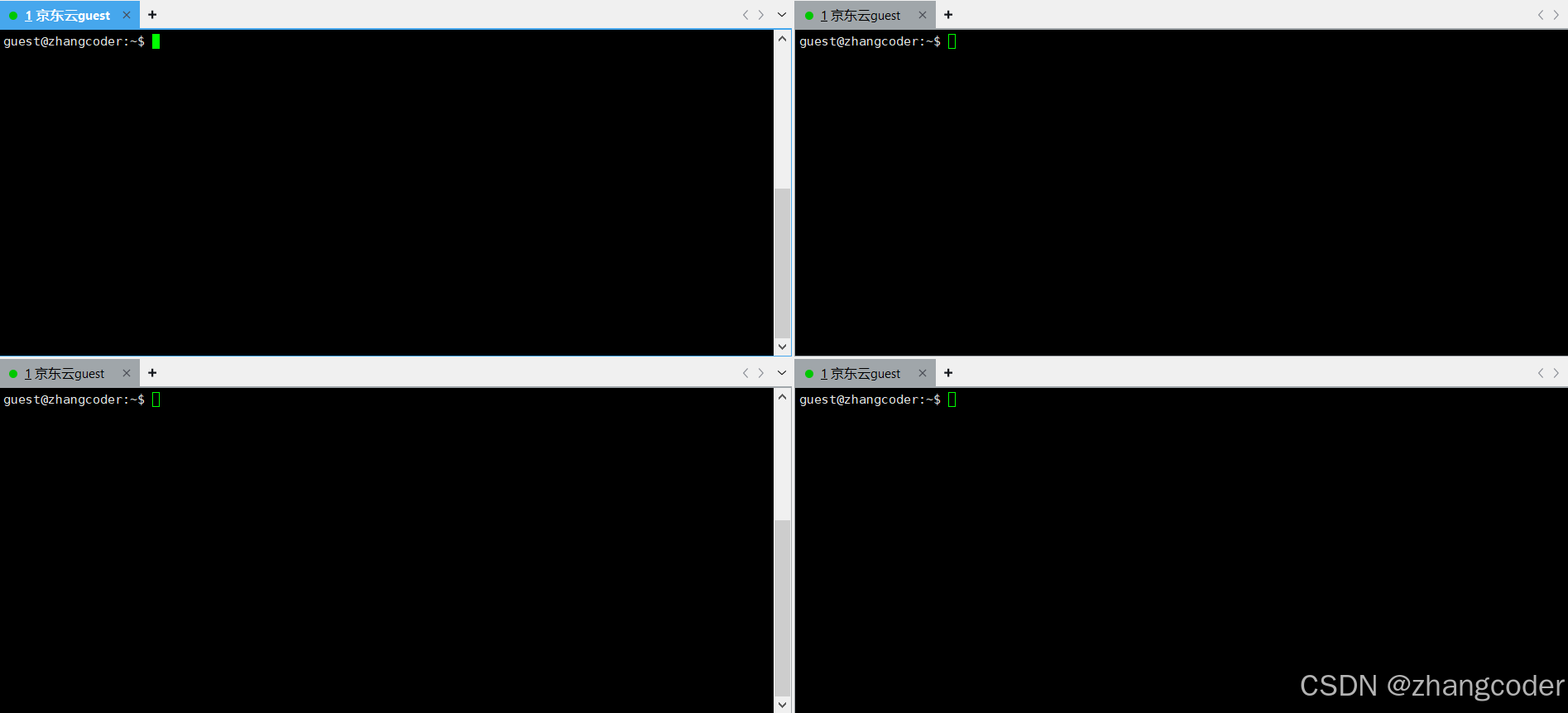
打开xshell,打开多个窗口,这里打开4个终端,都以同一个用户的身份登录:
此时查看/dev/pts下的内容:
ls -l /dev/pts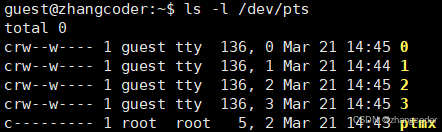
注: pts全称是pseudo terminal slave,伪终端从设备; ptmx全称是pseudo terminal multiplexor. 可以看看pts(4) - Linux manual page的描述
关掉其中一个终端,再查看/dev/pts中的文件:
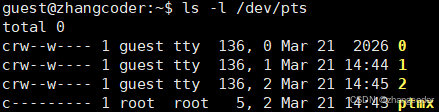
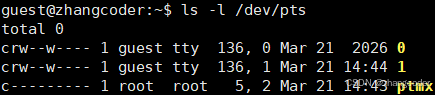
关掉其中一个终端,再查看/dev/pts中的文件:
尝试向/dev/pts/1中显示数据:

结论1: /dev/pts其中一个名称为数字的文件就是一个终端文件
关掉其中一个终端,再查看/dev/pts中的文件:

结论2: 如果开了多个终端,会在/dev/pts目录下生成多个终端文件
除此之外,可以看看stackexchange的两个回答:
linux - What is stored in /dev/pts files and can we open them? - Unix & Linux Stack Exchangetty - How does a Linux terminal work? - Unix & Linux Stack Exchange

openEuler 是由开放原子开源基金会孵化的全场景开源操作系统项目,面向数字基础设施四大核心场景(服务器、云计算、边缘计算、嵌入式),全面支持 ARM、x86、RISC-V、loongArch、PowerPC、SW-64 等多样性计算架构
更多推荐
 25
25 0
0- 0


 已为社区贡献6条内容

所有评论(0)